
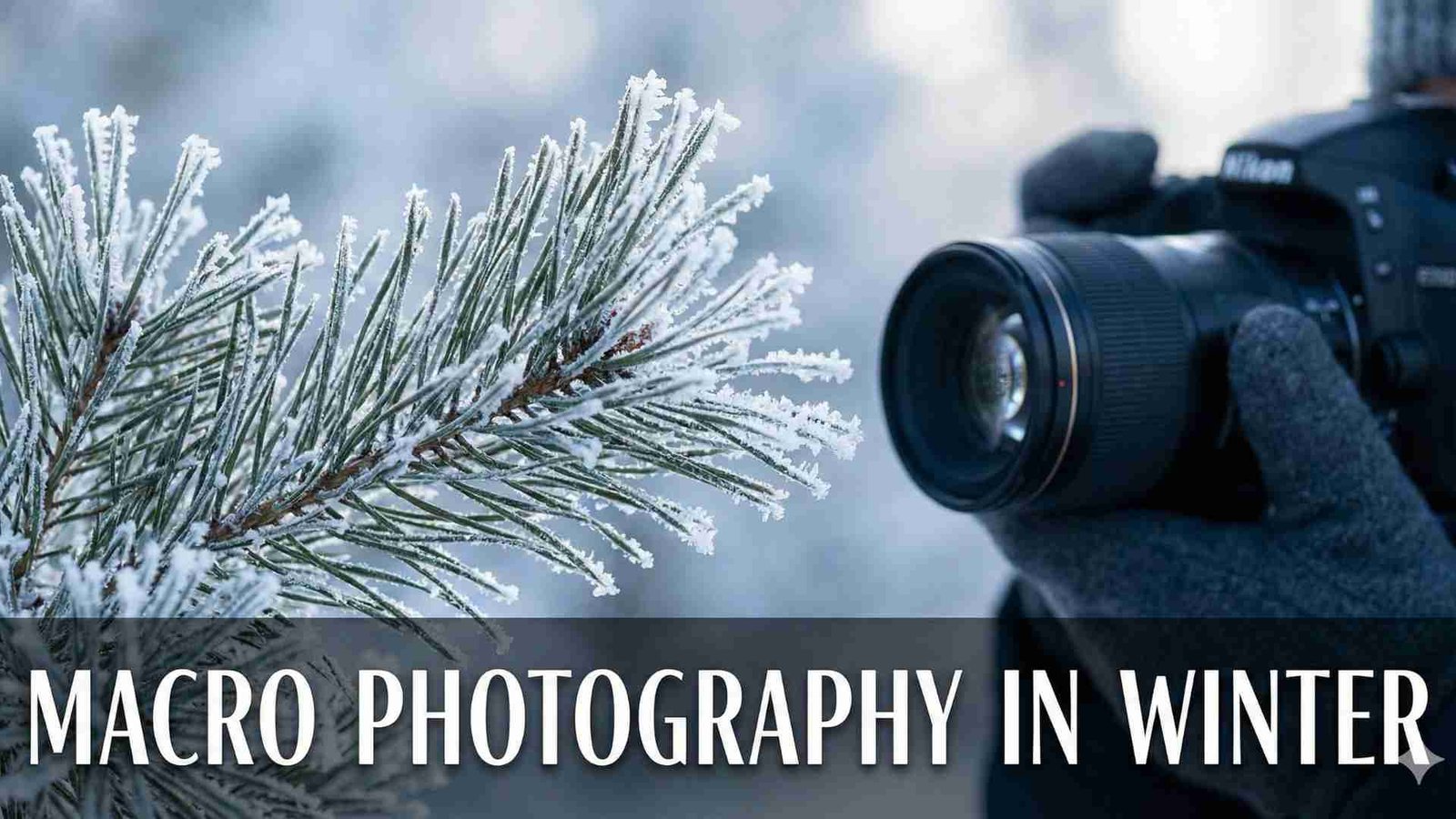
Winter changes the way we see the world. Everything slows down, colors soften, and tiny details become more visible than ever. For photographers, this season offers a quiet but powerful opportunity to explore nature on a miniature scale. Macro photography in winter is all about finding beauty in the smallest frozen details-delicate snowflakes, shimmering frost, and crystal-clear ice textures that disappear in seconds.
Unlike other seasons, winter strips nature down to its essentials. There are fewer distractions, fewer colors, and fewer moving elements. This simplicity makes macro photography in winter incredibly rewarding. You can focus purely on texture, light, and form. Even an ordinary leaf, when covered in frost, can turn into a breathtaking subject. With the right approach and mindset, winter can become one of the most creative times of the year for macro photographers.
Macro photography in winter has a unique charm that you simply cannot recreate in any other season. The cold transforms everyday objects into natural works of art. Snowflakes carry complex geometric patterns, frost paints glass and plants with silver designs, and ice creates abstract textures that feel almost unreal.
What makes macro photography in winter so special is its temporary nature. Many of your subjects exist for only a few minutes before melting or changing shape. This adds both urgency and excitement to every shot. You are not just photographing an object; you are capturing a fleeting moment that will never appear the same again.
Winter also offers softer light compared to harsh summer sun. Overcast winter skies act like a giant softbox, giving you gentle light that reduces harsh shadows. This is perfect for macro photography in winter, where even the smallest highlight or shadow can change the mood of your image.
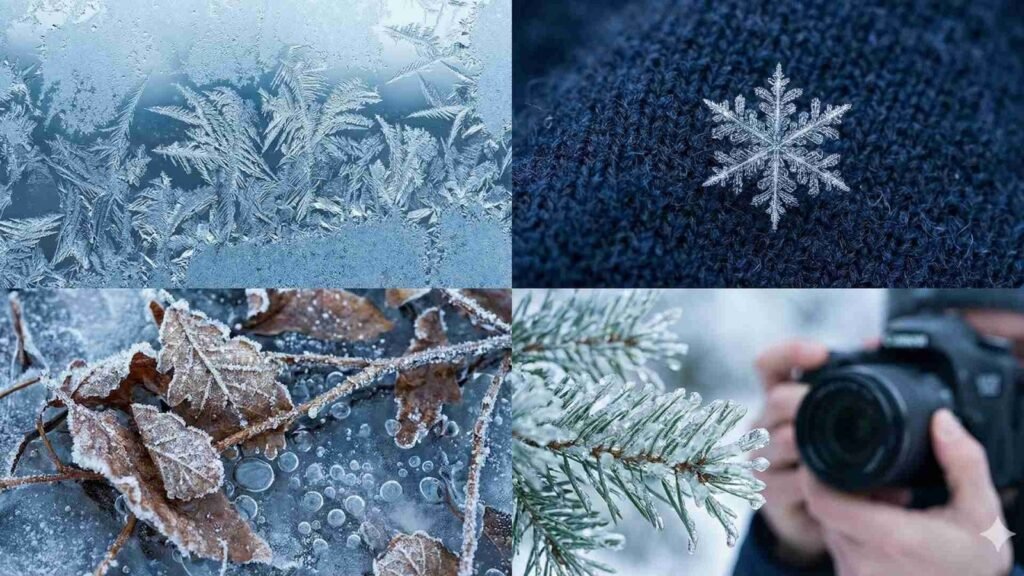
When practicing macro photography in winter, your subjects are all around you, even in places you might normally overlook. Snowflakes on dark surfaces, frost on windows, frozen leaves, ice bubbles trapped in ponds, and icy branches are all fantastic choices. The key is learning to see small details where others see emptiness.
Snowflakes are one of the most popular subjects in macro photography in winter, and for good reason. Each one is unique, and its symmetrical patterns look stunning at high magnification. Frost offers another beautiful subject, especially on glass and plants, where it forms feather-like patterns. Ice, whether on lakes, puddles, or hanging from roofs as icicles, provides endless opportunities for texture-focused compositions.
The beauty of macro photography in winter is that you do not need to travel far. Even your backyard, balcony, or nearby park can turn into a winter macro studio. Patience and observation are far more important than location.
Macro photography in winter does not necessarily require expensive equipment, but having the right tools certainly helps. A dedicated macro lens offers the best results because it allows you to focus very close and capture fine details with sharpness. Extension tubes can also be a budget-friendly alternative for increasing magnification.
Because winter light is often low, using a tripod becomes extremely helpful. It allows you to keep your camera steady while using slower shutter speeds. Handheld shooting is possible, but stability becomes more challenging when wearing gloves and dealing with cold fingers.
For macro photography in winter, using a smaller aperture helps keep more of your subject in focus. The depth of field is very shallow at high magnification, so careful focusing is essential. Manual focus often gives you better control than autofocus in these conditions. ISO should be kept as low as possible to avoid noise, especially since cold environments can sometimes exaggerate digital noise.
Light plays a huge role in macro photography in winter. The low position of the sun creates soft, angled light that adds depth to tiny textures. Early morning is often the best time to shoot because the frost is fresh, the snow is untouched, and the light is gentle.
Overcast days are also perfect for macro photography in winter. Cloudy skies act as a natural diffuser, reducing harsh reflections on ice and snow. This allows you to capture subtle details without blown highlights.
Backlighting can be very effective when photographing frost or translucent ice. When light passes through ice crystals, it creates a glowing effect that adds magic to your images. Experimenting with different angles of light can completely change the feel of your photograph without changing the subject at all.
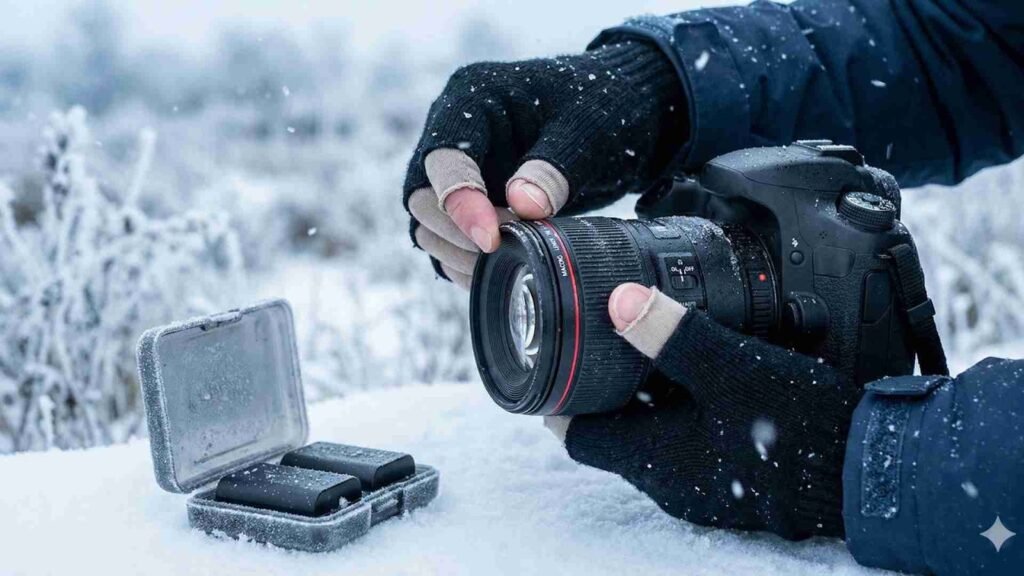
One of the biggest obstacles in macro photography in winter is the cold itself. Cold temperatures affect both the photographer and the equipment. Battery life drains much faster in low temperatures, so carrying spare batteries is always a good idea. Keeping them warm in your pocket helps extend their life.
Condensation is another issue to watch out for. When you move from cold outdoor air into a warm room, moisture can form on your lens and camera. Allow your equipment to adjust gradually to the temperature before using it indoors to avoid damage.
Your hands are also crucial tools in macro photography in winter. Thick gloves keep you warm, but make it harder to adjust tiny camera controls. Many photographers use thin inner gloves with removable fingertips to balance warmth and control. Staying comfortable helps you stay creative for longer periods.
Strong composition is what turns a simple winter detail into a powerful image. In macro photography in winter, backgrounds are just as important as subjects. A clean, soft background helps your frozen detail stand out clearly. Snow often creates beautiful natural backgrounds with smooth textures and gentle tones.
Leading lines can be found even in microscopic scenes. Cracks in ice, veins in frozen leaves, or the edges of frost patterns can guide the viewer’s eye across the frame. Filling the frame with your subject often works best in macro photography in winter because it emphasizes texture and detail.
Negative space is another powerful tool. Placing a single frosted leaf against a large white background of snow can create a calm and minimalistic image. This quiet style fits perfectly with the peaceful mood of winter.
Snowflakes are among the most delicate and challenging subjects in macro photography in winter. They melt quickly and require precise focus. Using a dark surface, such as a glove or fabric, helps make the snowflake stand out. Work quickly and gently, as even your breath can melt your subject.
Frost forms naturally overnight when temperatures drop. Window frost, in particular, offers endless creative possibilities. Its branching patterns resemble tiny forests or feathers, making it perfect for abstract macro photography in winter. Adjusting your angle slightly can dramatically change the way light reflects off frost crystals.
Ice comes in many forms, from smooth frozen surfaces to sharp icicles and trapped air bubbles in frozen water. Each form offers a different texture story. Macro photography in winter allows you to turn these icy structures into dramatic, almost surreal images by focusing on small segments instead of the whole object.
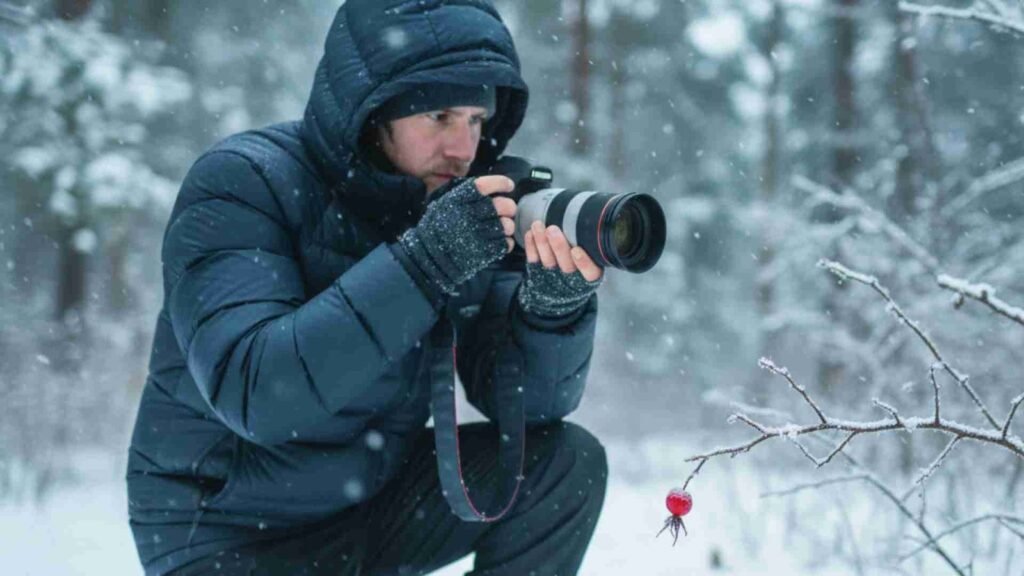
Macro photography in winter is not just about technique; it is also about mindset. Winter teaches patience. You may spend long periods searching for the right subject, and sometimes conditions will not cooperate. Snow may melt too quickly, or frost may not form when you expect it to.
Learning to slow down and observe is essential. Walk slowly, look closely, and be open to unexpected finds. Often, the best subjects in macro photography in winter are the ones you did not plan to photograph. A sudden shift in temperature, a change in light, or a tiny detail revealed beneath melting snow can become your most memorable shot.
Embracing the cold and working with it rather than against it will make the experience far more enjoyable. Dress warmly, take breaks when needed, and treat winter shooting as a peaceful exploration rather than a rushed task.
Editing plays an important role in bringing out the full beauty of macro photography in winter. Subtle adjustments to contrast, sharpness, and clarity can enhance frost textures and ice patterns without making them look unnatural.
White balance is especially important in winter images. Snow and ice can easily take on color casts from surrounding light. Correcting this helps maintain the clean and crisp look that winter scenes are known for.
Retouching can also help remove small distractions such as dust spots or minor imperfections. Professional image editing can elevate your winter macro shots, making them suitable for websites, portfolios, or commercial use. This is where expert services become highly valuable for photographers who want their work to look truly polished.
Macro photography in winter pushes you to refine your technical skills. You learn to work with limited light, shallow depth of field, and rapidly changing subjects. You also become better at manual focusing and precise composition.
Because winter strips away most colors, you are forced to think more deeply about texture, contrast, and form. This strengthens your eye for detail and improves your overall photography, even outside the macro world.
Many photographers find that macro photography in winter renews their creativity. When landscapes look quiet and inactive, the miniature world comes alive. This shift in perspective often leads to fresh ideas and new artistic directions.
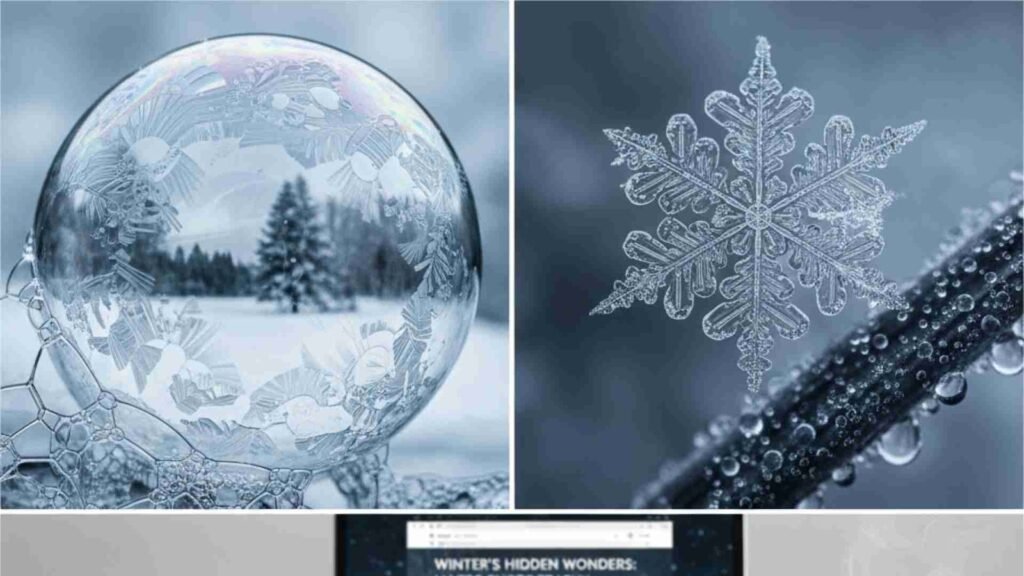
Macro photography in winter is highly engaging on digital platforms. Viewers love seeing hidden details that they would normally miss. Frozen bubbles, patterned frost, and crystalline snowflakes attract attention because they reveal a side of winter that feels almost magical.
These images perform well on websites, blogs, and social media because they combine natural beauty with scientific curiosity. They also work well for seasonal campaigns, greeting cards, educational content, and stock photography.
If you plan to use your winter macro images professionally, consistent quality and proper editing are essential. Clean backgrounds, sharp focus, and balanced exposure make your work stand out and build credibility with your audience.
Macro photography in winter opens a window to a hidden frozen world that most people walk past without noticing. From the delicate geometry of snowflakes to the bold textures of ice and frost, winter offers an endless supply of tiny wonders waiting to be captured.
By understanding light, mastering your equipment, choosing the right subjects, and developing patience, you can turn cold days into some of the most creatively fulfilling photography sessions of the year. Macro photography in winter is not only about capturing what you see, but also about learning to slow down and appreciate the fragile beauty of the season.
If you want your winter macro images to truly shine online, professional editing can make a powerful difference. At the end of your creative journey, aitinsider is here to support you with high-quality image editing services that enhance every detail of your work and help your photos stand out in the digital world.