
If you’re starting a brand, building an online store, or improving your product photos, one of the biggest questions you’ll face is which camera to buy without overspending. And that’s exactly why you’re searching for the Best Camera for Product Photography Under $500. You want something affordable, reliable, and capable of producing crisp, professional, selling-ready images-without jumping into high-end camera territory.
The good news is that you absolutely can create beautiful product images with a budget camera. In fact, many online sellers get incredible results with entry-level DSLRs, mirrorless cameras, and even compact cameras that cost less than $500. The key is understanding what specs matter most, which features help product photographers specifically, and which models offer the best value for new or growing eCommerce brands.
So in this guide, I’ll walk you through everything you need to know in friendly, easy-to-understand language. We’ll explore what makes a camera good for product photos, what specs truly matter, and of course, the top recommendations for the Best Camera for Product Photography Under $500. By the end, you’ll feel confident choosing a camera that fits your needs, your budget, and your workflow.
Before diving into the list, let’s clear up a misconception. Many beginners assume they need a $2000 camera to create clean and professional product images. But the truth is, the quality of your lighting, background, lens choice, and editing has far more impact than your camera model. As long as you choose a camera with decent image resolution, good color accuracy, and proper lens compatibility, you can achieve studio-quality images for your brand.
This is why the Best Camera for Product Photography Under $500 is such a popular topic. More sellers today understand that you can get amazing results without draining your budget. And with sites like Amazon, Shopify, Etsy, and eBay becoming more competitive, even small business owners are looking for smart investments.
Your camera is a tool, not the final determining factor. It captures the raw details, while lighting, composition, and post-production decide the final look. In fact, many successful brands started with entry-level cameras and built multi-million-dollar businesses before ever upgrading.
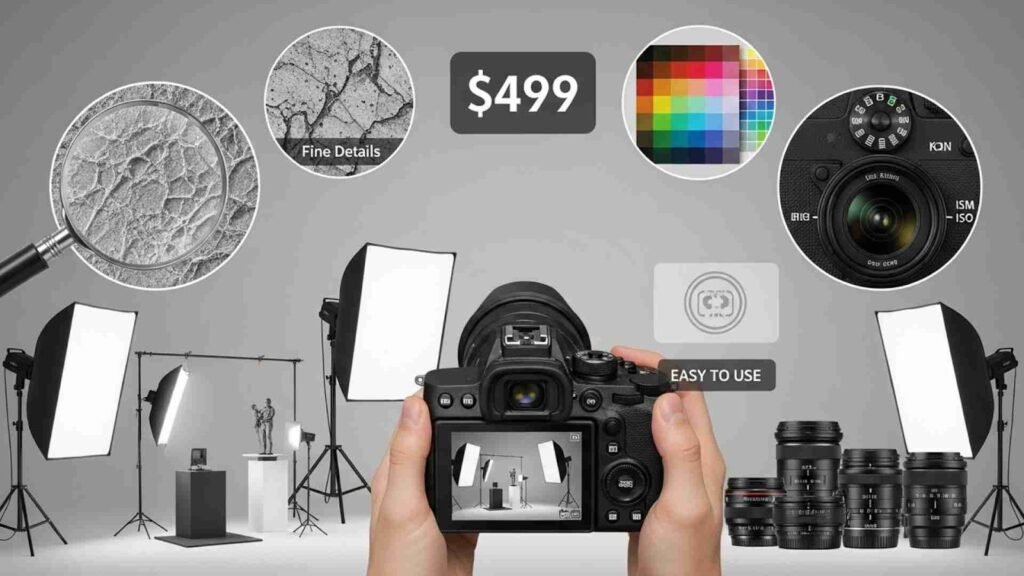
Let’s break down the main qualities that make a camera suitable for professional product photography-without confusing technical jargon. When choosing the Best Camera for Product Photography Under $500, you want a camera that:
Product photography requires clarity. Customers want to zoom in and see texture, stitching, labels, ingredients, and small details. So the camera must offer enough resolution to capture fine details.
Most cameras in this budget range offer between 16 and 24 megapixels, which is more than enough for eCommerce.
Colors are everything in product photography. A wrong shade of red or a dull blue can make your product appear cheaper or incorrect. A good budget camera should reproduce colors accurately, especially when paired with proper lighting.
Manual settings allow you to control aperture, shutter speed, ISO, and white balance. This gives you full creative control and helps you achieve consistent results. Any camera you choose should allow manual shooting.
This is a huge advantage. Cameras that let you change lenses give you more flexibility. You can attach a macro lens for small products, a standard lens for larger items, or even specialty lenses for creative shoots.
Not all budget cameras support interchangeable lenses, but many DSLRs and mirrorless cameras do.
Since product photos are usually taken indoors with artificial light, a camera that performs well at low ISO settings is ideal. The best models allow you to shoot with minimal noise when using studio lights or softboxes.
A user-friendly camera saves time, especially if you’re a beginner. A good grip, simple menus, and intuitive controls make a big difference in your workflow.
These qualities form the core of what makes the Best Camera for Product Photography Under $500 a smart investment for new brands and online sellers.
You may be wondering: can $500 really get you something good? Absolutely. The budget camera landscape has changed dramatically. Used and refurbished options have made professional-level cameras more accessible than ever. Even new models in this range work incredibly well for product photography.
With a $500 budget, here’s what you can realistically expect:
You’ll find several entry-level DSLR and mirrorless cameras with sharp sensors, great dynamic range, and solid performance. You may also get kits that include a lens. While kit lenses are not always the best for product photography, they are a great starting point.
Your budget may also allow you to buy a camera body and invest in a sharp prime lens, such as a 50mm f/1.8. This combination can outperform many high-priced camera kits simply because a sharp lens makes a big difference.
You can comfortably work with lighting equipment, softboxes, backdrops, and reflectors because these cameras support full manual control.
In short, the Best Camera for Product Photography Under $500 today is far better than what photographers had ten years ago, even at higher price points.
Before we explore each camera in detail, let’s set expectations. The models in this guide are a mix of new, used, and refurbished options because that’s how most online sellers shop today. A refurbished camera from a reputable source is just as reliable as new, but far more budget-friendly.
We’ll also look at what makes each model ideal for product photography, and what type of brand or business each one suits.
Remember, the goal here is to help you choose the Best Camera for Product Photography Under $500 based on your needs-not just to list random camera models.
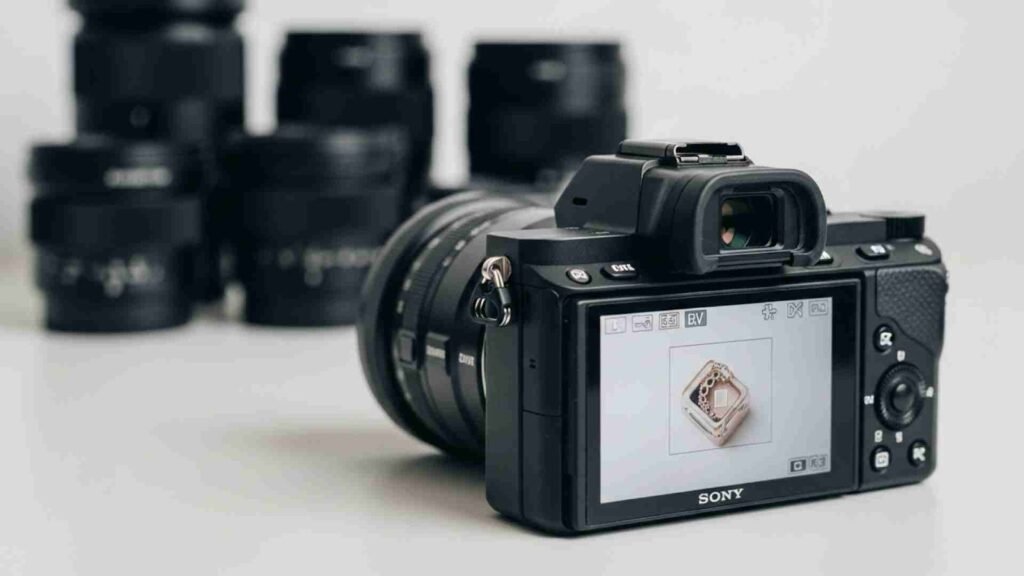
The Canon EOS Rebel T7 is easily one of the most common recommendations for product photography on a budget. It’s often priced under $500 with a kit lens included, making it one of the best entry-level values on the market.
The T7 offers a 24.1 MP APS-C sensor, which gives you plenty of resolution to capture sharp product images. Its colors are natural, and the camera performs exceptionally well under studio lights. Since most product photography happens at low ISO levels, the T7 delivers clean, noise-free images that look professional even without heavy editing.
Its menus are simple, the body feels solid, and focusing is reliable for stationary subjects-making it perfect for small business owners, Etsy sellers, or anyone shooting for an online catalog. It also supports Canon’s wide range of lenses, which means you can upgrade your gear over time without replacing the camera.
Because of its stability, detail, and easy learning curve, the Rebel T7 remains one of the top choices for the Best Camera for Product Photography Under $500.
If you prefer a mirrorless camera, the Sony A6000 is a standout performer. Despite its age, it remains one of the best cameras Sony has ever released in the budget category. You can often find it under $500, especially refurbished or with a kit lens.
The A6000 has a 24.3 MP sensor, fast autofocus, and excellent color science. The mirrorless design makes it compact and lightweight. Its live view screen helps you see exposure changes instantly, which is extremely useful when shooting product images.
Sony’s E-mount lens ecosystem is huge, so you can pair this body with sharp primes or inexpensive macro lenses. This flexibility makes it perfect for brands that shoot small items like jewelry, cosmetics, gadgets, and accessories.
For many photographers, the Sony A6000 is the most complete option when choosing the Best Camera for Product Photography Under $500 because of its speed, accuracy, and versatility.
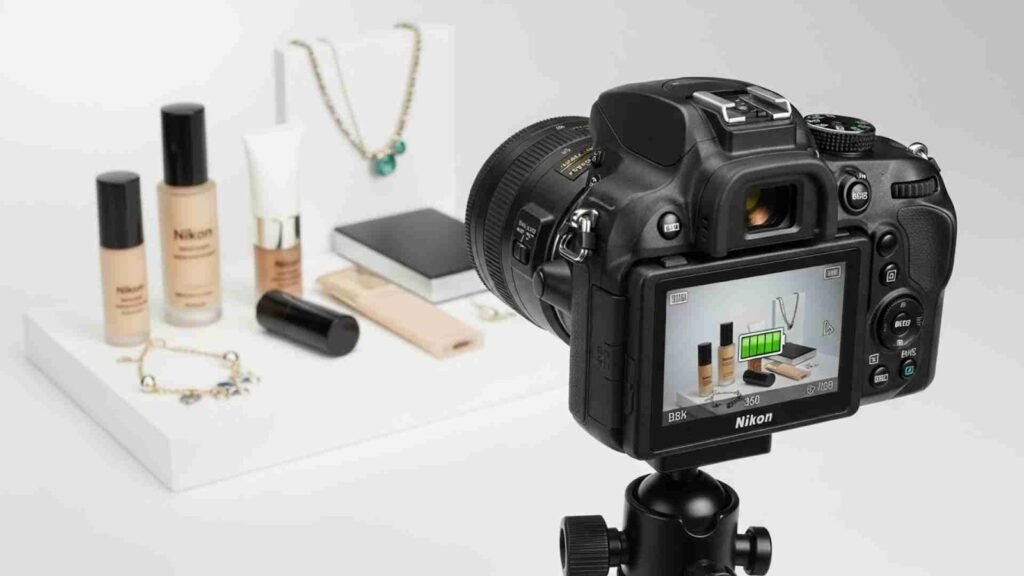
Another excellent option for the Best Camera for Product Photography Under $500 is the Nikon D3500. This entry-level DSLR is known for its simplicity, reliability, and surprisingly high image quality. It features a 24.2 MP APS-C sensor, which provides sharp details and vibrant colors, ideal for eCommerce photography.
One of the D3500’s strengths is its battery life. You can shoot hundreds of images without recharging, which is perfect for small business owners or online sellers who are photographing multiple products in one session. Its lightweight body is easy to handle, even during long shoots, and the menus are beginner-friendly.
While the kit lens is decent, the D3500 also supports a variety of Nikkor lenses. Investing in a 35mm or 50mm prime lens significantly improves sharpness and image clarity. This makes it a versatile tool for shooting jewelry, cosmetics, clothing, and even small electronics.
For sellers who want a reliable DSLR with a straightforward learning curve, the Nikon D3500 stands out as a top contender for the Best Camera for Product Photography Under $500. It balances quality, affordability, and ease of use.
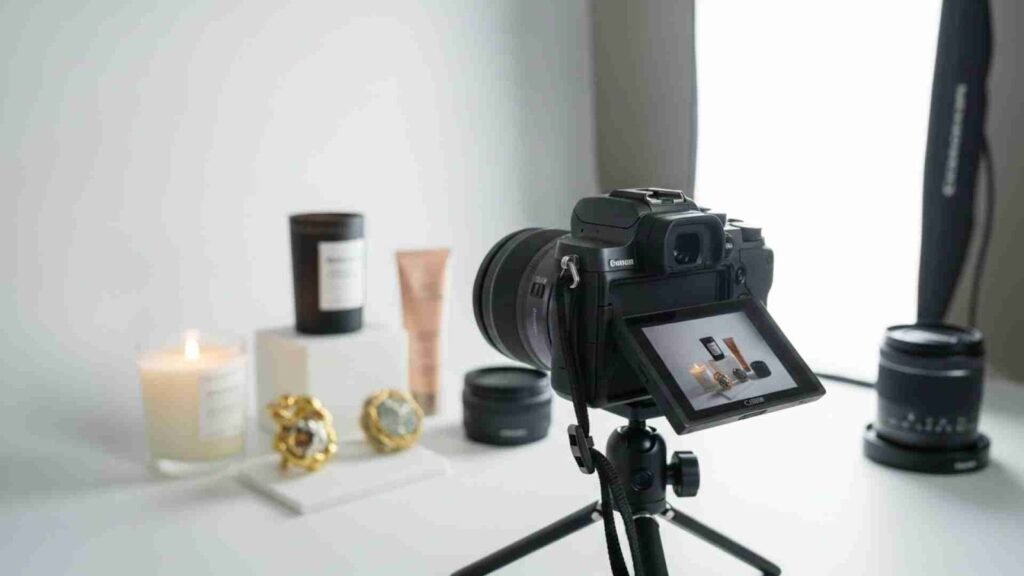
The Canon EOS M50 is a mirrorless option worth considering for product photography under a budget. While brand-new models may exceed $500, used or refurbished options often fit your budget. It comes with a 24.1 MP APS-C sensor and Canon’s excellent color science, which makes product images look natural and appealing.
Mirrorless cameras like the M50 are smaller than DSLRs, making them ideal for small studios or limited shooting spaces. They also offer a fully articulating screen, allowing you to easily frame top-down shots or experiment with different angles.
The M50 supports Canon EF-M lenses, and adapters can expand the range further, giving you flexibility for macro or prime lenses. Its autofocus is fast and accurate for stationary product shots, and its performance under artificial light is excellent.
Suppose you prefer a compact, mirrorless solution. In that case, the Canon EOS M50 (used or refurbished) is another strong candidate for the Best Camera for Product Photography Under $500, especially for lifestyle or social media product imagery.
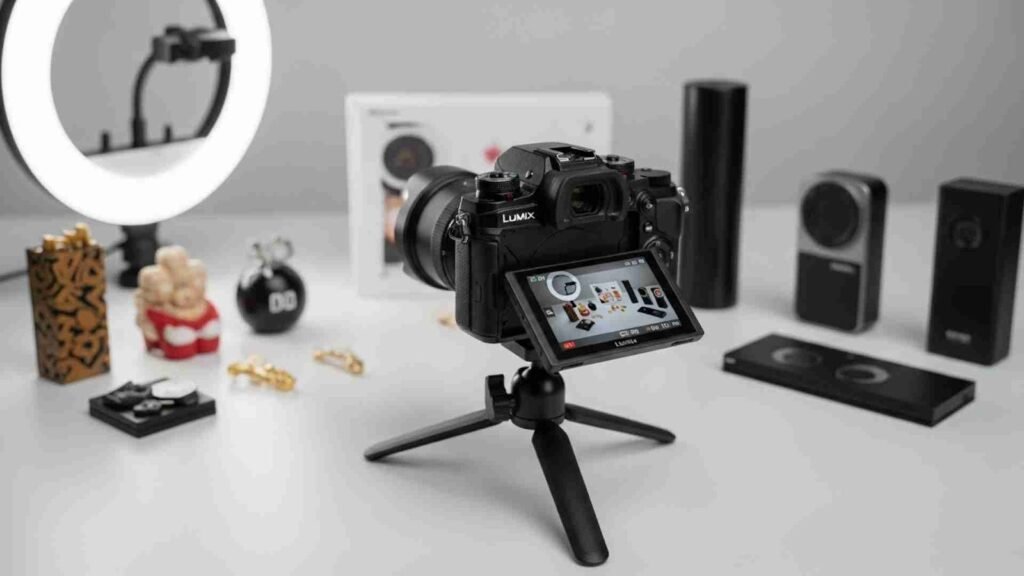
For those who want video capability along with still photography, the Panasonic Lumix G7 is a standout. Often priced under $500 for a body-and-lens kit, it features a 16MP Micro Four Thirds sensor and delivers crisp, sharp images. Its real advantage is 4K video, allowing new brands to create product videos alongside their images without buying an expensive camcorder.
While the sensor is smaller than APS-C, it performs well in controlled lighting setups. Pairing the G7 with a sharp Micro Four Thirds lens enables high-quality images suitable for product catalogs, Etsy listings, or Amazon product pages.
Its flip-out screen, ease of use, and affordability make it a practical choice for startups that need both photography and videography. The Panasonic G7 proves that the Best Camera for Product Photography Under $500 doesn’t have to sacrifice versatility.
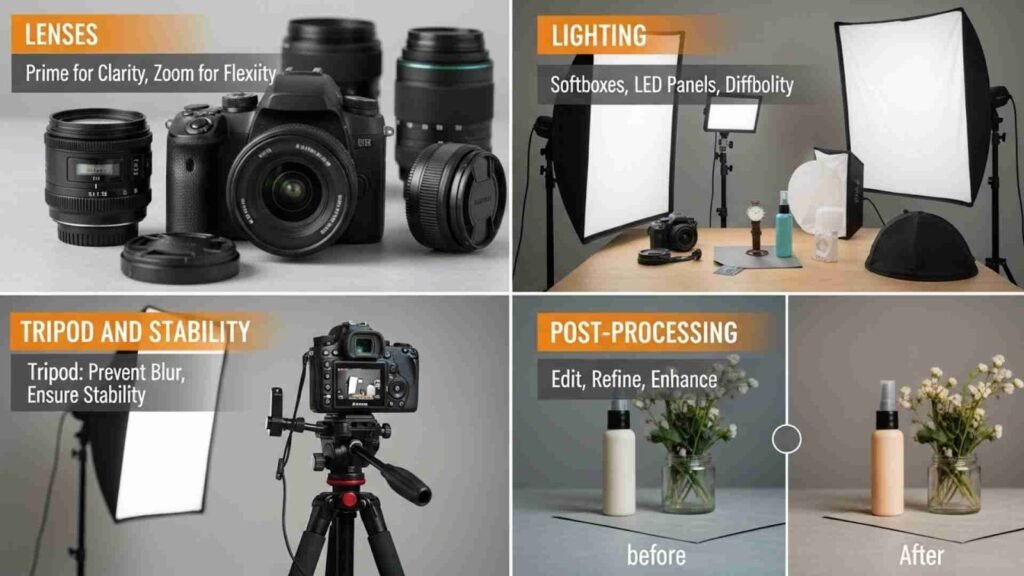
While these cameras are excellent picks, selecting the Best Camera for Product Photography Under $500 involves more than just the model. You should also consider a few practical factors:
A sharp lens is often more important than the camera body itself. Prime lenses, such as a 50mm f/1.8 deliver superior clarity for small products, while zoom lenses can be more flexible for larger items or lifestyle shots.
Budget cameras work best in controlled lighting. Using softboxes, LED panels, or diffusers ensures your images stay crisp and well-exposed. Great lighting allows even entry-level cameras to produce professional results.
Many affordable cameras do not have advanced stabilization features. Using a tripod helps prevent blur, especially in low-light setups or macro photography. Stability is key to capturing fine product details.
Even the Best Camera for Product Photography Under $500 benefits from editing. Post-production allows you to adjust colors, remove minor imperfections, and enhance sharpness. At aitinsider, we specialize in professional product image editing to make your photos truly stand out.
Buying the right camera is just the first step. To get the most out of your budget camera, consider these strategies:
Focus on lighting. Whether using natural light or studio lights, proper illumination is essential. Even the most basic camera produces great results when the lighting is controlled.
Use a plain background. White or neutral backdrops reduce distractions and highlight the product. Budget cameras perform best when the scene is clean and well-lit.
Stabilize your shots. Tripods prevent camera shake and maintain sharpness. This is especially important for small products like jewelry or electronics.
Learn manual settings. Understanding aperture, shutter speed, and ISO ensures you can adapt to different products and lighting conditions. Manual control is crucial for creating professional images with a budget camera.
Invest in post-processing. Editing software helps correct colors, enhance details, and remove minor imperfections. A combination of a budget camera and quality editing can deliver results comparable to high-end setups.
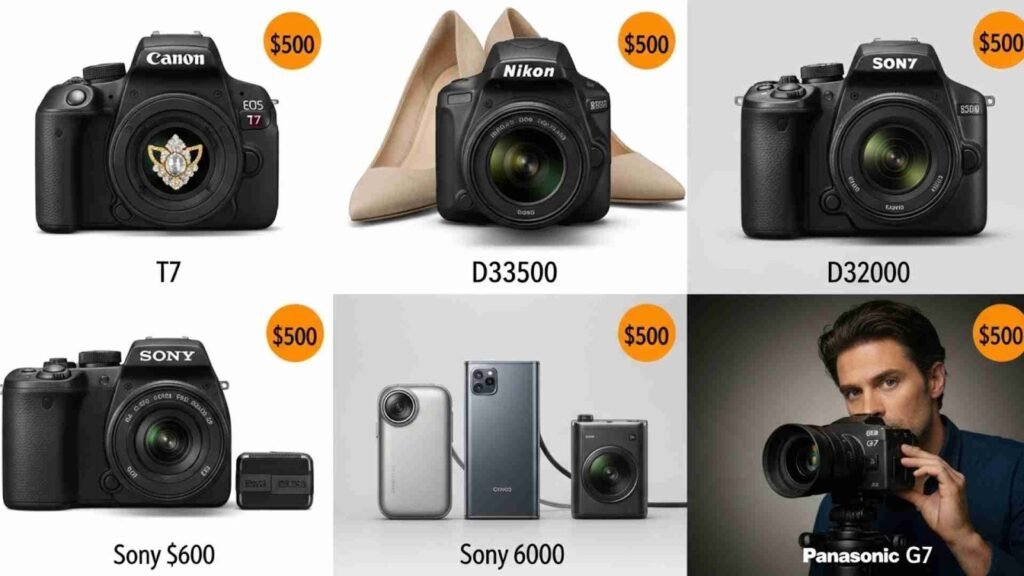
When choosing the Best Camera for Product Photography Under $500, it helps to compare the top options to see which fits your needs. Each camera has strengths depending on the type of products you shoot, your studio setup, and your future growth plans.
For small products like jewelry, watches, or cosmetics, cameras with high-resolution sensors and sharp lenses are essential. The Canon EOS Rebel T7 or Nikon D3500 paired with a prime lens, provides excellent detail and color accuracy. Their DSLRs also allow for easy macro photography and controlled lighting setups.
For medium-sized products, like shoes, apparel, or gadgets, all four cameras mentioned-Canon T7, Nikon D3500, Sony A6000, and Panasonic G7-perform well. Here, flexibility and ease of use matter as much as raw resolution. Mirrorless options like the Sony A6000 offer faster autofocus and more compact designs, making setup easier in smaller studios.
For video content or lifestyle shots, the Panasonic G7 shines. Its 4K video capability allows brands to create product demos, tutorials, and social media content alongside still photography, all without needing an additional camera.
Ultimately, the Best Camera for Product Photography Under $500 depends on your priorities: if you value clarity and simplicity, DSLRs like the T7 or D3500 work best. If you want compactness and speed, mirrorless cameras like the A6000 or M50 are ideal. If you want video capability on a budget, the G7 is unbeatable.
Let’s look at real-world examples to show how choosing the Best Camera for Product Photography Under $500 impacts your results.
Jewelry and Small Accessories: High-resolution DSLRs like the Canon T7 or Nikon D3500 with a macro or prime lens capture fine details, sparkle, and textures. Even budget cameras can produce images rivaling higher-end systems when paired with good lighting.
Cosmetics and Bottled Products: A medium-sized product benefits from even lighting and accurate colors. The Canon EOS M50 or Sony A6000 performs well here, especially for lifestyle or social media shots.
Clothing and Fashion Accessories: Medium-range DSLRs and mirrorless cameras provide enough field of view and flexibility to capture the full product. A standard 18-55mm lens or 35mm prime lens gives clear, sharp images for online stores.
Electronics and Gadgets: Products with reflective surfaces, small buttons, and textured materials need cameras with reliable autofocus and sharp lenses. Budget DSLRs and mirrorless cameras excel here when combined with soft, even lighting.
Furniture and Larger Decor: Here, your distance from the subject is greater, so even a wider aperture camera can deliver sharp results. Cameras like the Panasonic G7 provide flexibility while capturing both stills and 4K video for product demos.
These examples show that even under $500, you can achieve professional-quality product images across a wide range of product categories.
While your camera is important, accessories often make the biggest difference in producing professional product images. Consider investing in:
Even the Best Camera for Product Photography Under $500 cannot compensate for poor lighting or an unsteady setup. A combination of a budget-friendly camera and the right accessories can produce results that look far more expensive than the actual investment.
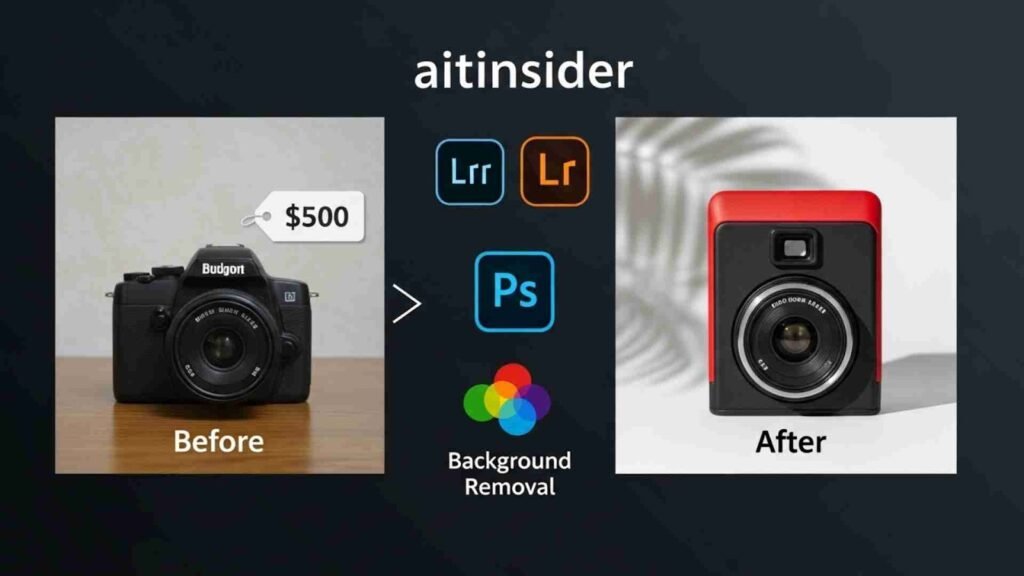
Post-production is where budget cameras truly shine. Even if your camera doesn’t capture perfect lighting or color balance, tools like Lightroom, Photoshop, or dedicated product editing services can enhance your images.
At aitinsider, we specialize in product photo retouching, background removal, color correction, shadow creation, and high-end enhancements. This ensures your images look consistent, professional, and selling-ready, regardless of which budget camera you choose. Pairing a $500 camera with professional editing services can rival images produced by much more expensive cameras.
Here’s a quick summary of what to keep in mind:
All of these cameras meet the core criteria for the Best Camera for Product Photography Under $500. The choice depends on the type of products you shoot, your studio setup, and whether you plan to expand your gear in the future.
Choosing the Best Camera for Product Photography Under $500 doesn’t mean sacrificing quality. By focusing on resolution, color accuracy, manual control, and lens flexibility, you can produce crisp, professional images that help your brand sell. Paired with proper lighting, a stable setup, and post-production editing, even budget cameras can create high-quality product photos that rival much more expensive setups.
Investing in a good camera, combined with smart accessories and editing, allows new brands and online stores to start strong without breaking the bank. Remember, clarity, lighting, and consistency matter more than the price tag of your camera.
At aitinsider, we understand that even the best camera sometimes needs a professional touch. Our team specializes in product photo editing, retouching, color correction, background cleanup, and high-end enhancements to make your images look polished and ready to sell.
Whether you shoot with the Canon T7, Nikon D3500, Sony A6000, or any other budget camera, aitinsider ensures your products look their absolute best. From eCommerce listings to Amazon, Shopify, Etsy, or social media, we help your brand stand out with professional, selling-ready images without needing expensive equipment.