
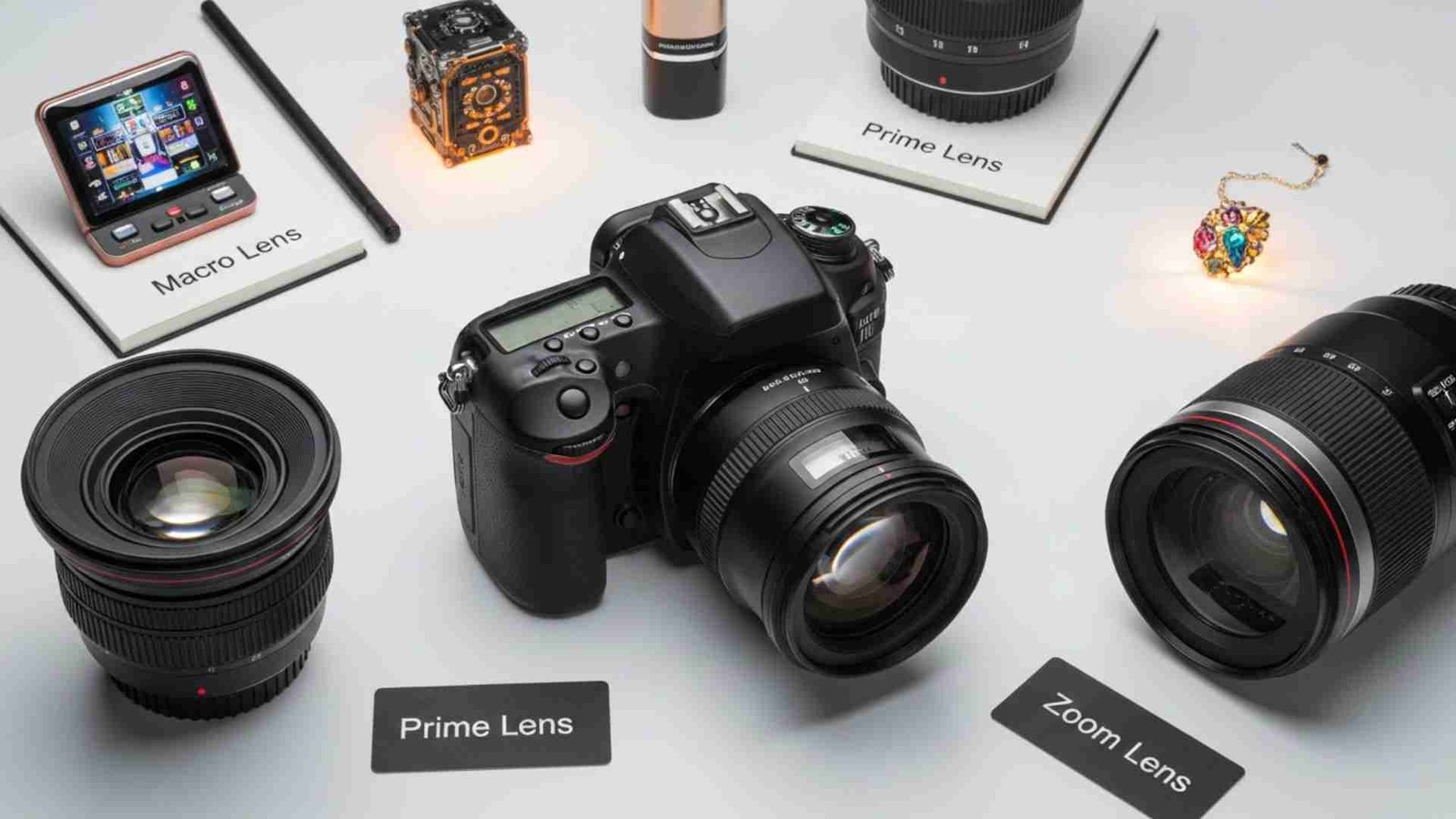
Suppose you’re searching for the Best DSLR Lens for Product Photography. In that case, you’re probably comparing different lens types, wondering which one gives you the sharpest details, the best colors, and the cleanest results for your product photos. Whether you shoot small items like jewelry or bigger items like shoes, bags, or electronics, choosing the right lens is one of the most important decisions you’ll ever make in your product photography workflow.
In this guide, written especially for aitinsider readers, we’ll take a friendly but deeply informative look at how different lenses perform, how they affect the style and sharpness of your photos, and which ones are truly worth your money. This article is intentionally created for users with commercial intent, meaning you’re not just learning – you’re comparing and preparing to buy. And because your keyword is essential, you’ll see the phrase Best DSLR Lens for Product Photography more than five times throughout this article.
Let’s dive into the world of macro, prime, and zoom lenses so you can confidently choose the Best DSLR Lens for Product Photography for your business, online store, or client projects.
Understanding What Makes a Lens “The Best DSLR Lens for Product Photography”
Before jumping into the comparisons, it’s important to talk about what actually makes one lens better than another for product images. A great product photo depends on four major things: sharpness, distortion control, color accuracy, and how close the lens can focus. These factors decide whether your images look clean and professional or flat and ordinary.
When people talk about the Best DSLR Lens for Product Photography, they’re usually focusing on lenses that deliver incredible detail at close distances. For example, a macro lens can render the texture of leather bags, the thread on clothing, or the fine edges on a piece of jewelry with stunning accuracy. This is why macro lenses dominate product photography.
However, not every product shooter wants or needs a macro lens. Many products are larger or need lifestyle-style shots, where a prime lens or a zoom lens gives you more flexibility. That’s why we are comparing macro lenses, prime lenses, and zoom lenses – to help you decide which works best for your specific products.
Why Macro Lenses Often Win the “Best DSLR Lens for Product Photography” Comparison
When you’re photographing products for e-commerce, catalogs, advertisements, or social media, you want the product to look crisp. But crisp isn’t just about sharpness – it’s about clarity from edge to edge, maintaining color accuracy, and eliminating distortion.
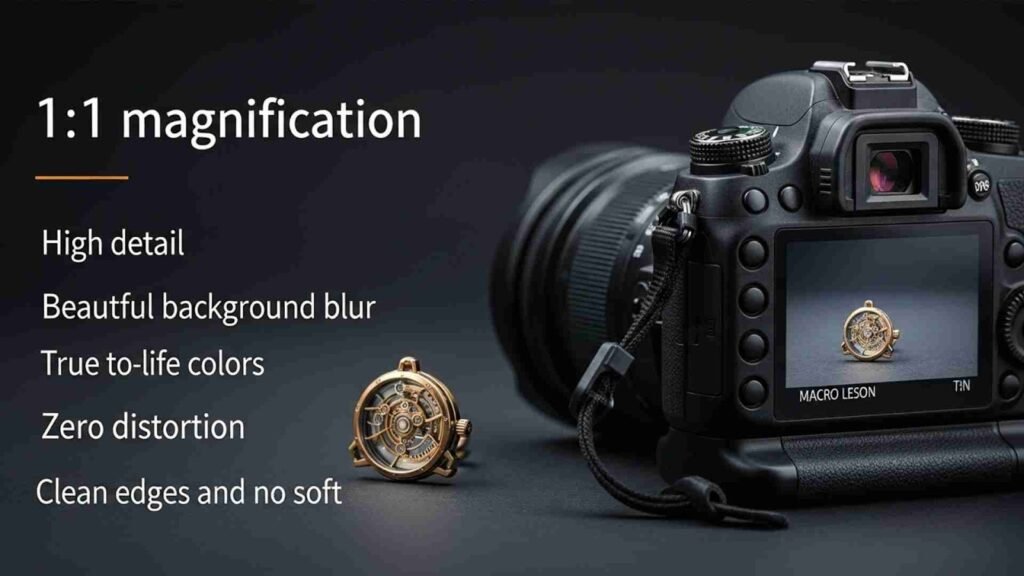
A macro lens offers 1:1 magnification, which means the product appears life-size on the camera’s sensor. This is perfect for jewelry photography, cosmetics, watches, electronics, and any item where fine detail matters. Macro lenses also allow you to get extremely close without losing sharpness.
This is why so many experts call macro lenses the Best DSLR Lens for Product Photography.
A typical 90mm or 100mm macro lens produces:
- High detail
- Beautiful background blur
- True-to-life colors
- Zero distortion
- Clean edges with no softness
When your goal is pure clarity, you simply can’t beat a macro lens. But that doesn’t mean macro lenses are the only answer – especially for medium- or large-sized products.
Prime Lenses vs. Macro Lenses: Which One Do You Need?
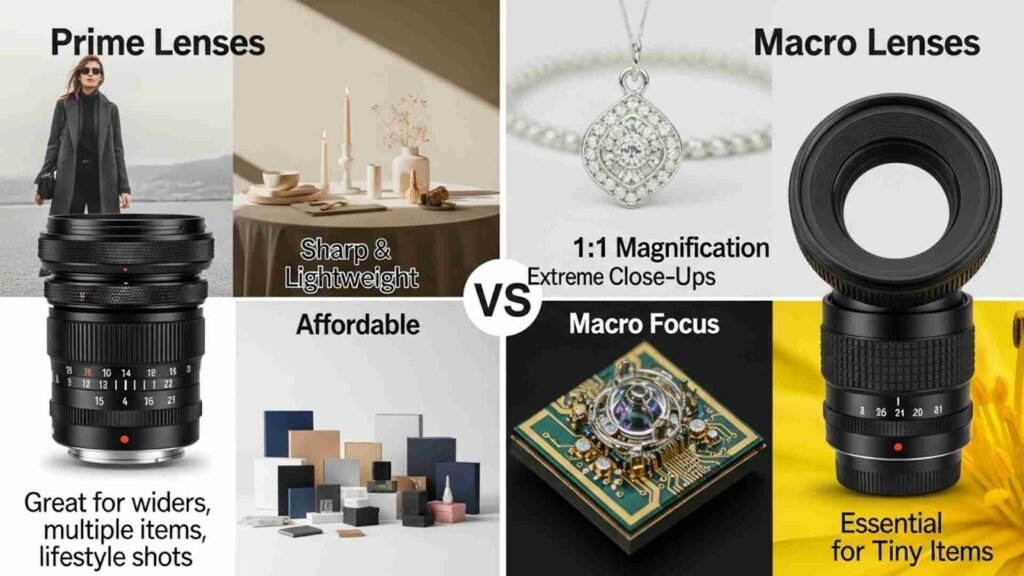
Prime lenses are lenses with a fixed focal length, like 35mm, 50mm, or 85mm. They don’t zoom, but they are extremely sharp and lightweight, and they’re also more affordable. When people compare primes with macros in the context of finding the Best DSLR Lens for Product Photography, the decision usually comes down to your product type and shooting style.
A 50mm prime is great for lifestyle shots, clothing photography, tabletop items, and model shots where movement and lighting variety matter more than extreme close-ups. A 35mm prime is better for showing larger products in a small space because it fits more into the frame. An 85mm prime gives you tight product compositions with beautiful compression.
However, even the sharpest primes do not offer 1:1 magnification, so for very tiny items, you won’t get the same accuracy as a macro lens.
Prime lenses are fantastic when:
- You want clean product shots without heavy close-up demands
- You shoot wider scenes or multiple items together
- You need a more budget-friendly option
- You don’t want to constantly move your lights to adjust working distance
If you regularly photograph items that fill the frame easily, a prime might be your best value option.
Zoom Lenses for Product Photography: Are They Worth It?
Professional product photographers sometimes debate whether zoom lenses deserve a spot in the conversation about the Best DSLR Lens for Product Photography. The truth is: they absolutely do, depending on what kind of products you shoot.
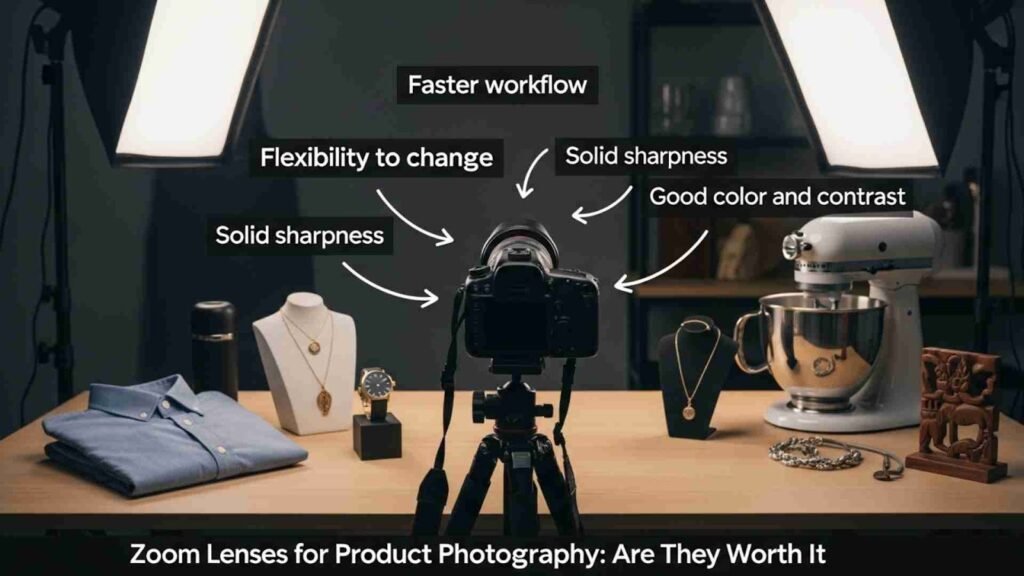
A high-quality zoom lens, like a 24-70mm, lets you adjust your framing instantly without physically moving your tripod or lights. This is a huge benefit when you’re shooting multiple products of different sizes – like apparel, accessories, kitchen appliances, or furniture details. The ability to quickly switch between wide shots and tight shots saves time and effort.
Zoom lenses provide:
- Faster workflow
- Flexibility to change compositions
- Solid sharpness (especially in pro-grade zooms)
- Good color and contrast
However, zoom lenses generally aren’t as sharp as macro lenses, especially at close distances. Also, many zoom lenses distort the edges when shooting wide, which is not ideal for clean product lines.
If you need speed and versatility more than extreme sharpness, a zoom lens might be the best choice.
Focal Length Breakdown: What You Should Choose for Your Products
Choosing the Best DSLR Lens for Product Photography depends heavily on the size of the product.
For jewelry, small accessories, and detailed items
A 90mm or 100mm macro lens is ideal. You get perfect detail without shadows caused by shooting too close.
For medium products like shoes, handbags, cosmetics, and food
A 50mm prime or a 60mm macro lens offers natural perspective and excellent edge-to-edge sharpness.
For large products in small studio spaces
A 35mm prime or a 24-70mm zoom lens helps you fit everything comfortably in the frame.
For a versatile, all-purpose product work
A high-end 24-70mm or 24-105mm zoom lens lets you shoot everything from flat lays to standing products.
Image Quality Differences: What You Actually See in Photos
If you ever compare lenses side-by-side, you’ll notice how much a lens affects your final image. For photographers searching for the Best DSLR Lens for Product Photography, it’s useful to understand what differences actually matter.
Sharpness
Macro lenses are always the sharpest. Primes follow closely. Zooms vary depending on price and quality.
Color Accuracy
Macro and prime lenses usually produce cleaner colors with less tint or color shift.
Depth of Field
Macro lenses have a very shallow depth of field, which can be both beautiful and difficult. You may need to stop down to f/8 or f/11 or use focus stacking.
Distortion
Prime lenses and macro lenses show almost no distortion, making product edges look straight and natural. Zooms, especially wide ones, may introduce barrel distortion.
Lighting Compatibility and Lens Behavior
The way a lens reacts to studio lighting is another reason why choosing the Best DSLR Lens for Product Photography is so important. Different lenses handle reflections differently, especially when shooting shiny items like metal, glass, plastics, watches, and eyeglasses.
Macro lenses reduce glare because they allow you to position your lights more comfortably. Prime lenses provide excellent contrast. Zoom lenses may cause more reflection issues because of their larger front elements.
Proper lighting techniques can solve most issues, but the right lens makes the entire process easier.
Comparing Macro, Prime & Zoom Lenses for the Best DSLR Lens for Product Photography
Now that we’ve covered the role of each lens type, it’s time to compare them more deeply so you can clearly understand which one truly fits your photography workflow. When users search for the Best DSLR Lens for Product Photography, they usually want real-world clarity, not just technical specifications. So instead of giving you a list of numbers, I’ll break down how each lens type behaves in everyday product shoots.
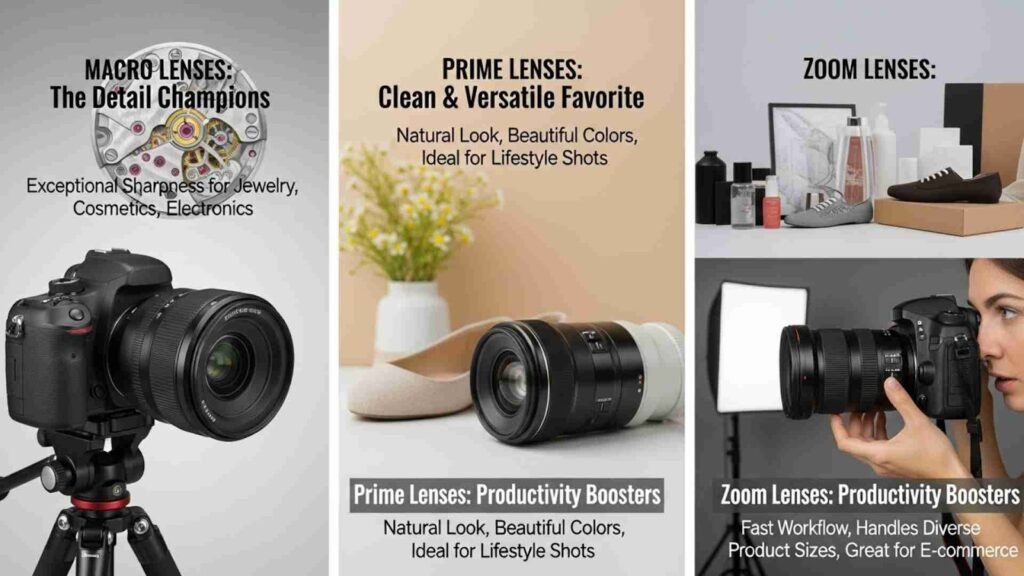
Macro Lenses: The Detail Champions
Macro lenses are the gold standard when it comes to capturing tiny textures and crisp edges. For product photographers who regularly shoot jewelry, makeup items, skin-care bottles, watches, electronics, or finely detailed accessories, a macro lens will almost always be the Best DSLR Lens for Product Photography.
A macro lens gives you the power to get extremely close while maintaining perfect sharpness. This is something that primes and zooms simply cannot replicate. Even at narrow apertures like f/16, macro lenses keep fine detail intact with minimal chromatic aberration.
Macro lenses also offer more working distance, which means you don’t need to shove the camera directly in front of the product. This helps with lighting because your studio lights stay unobstructed.
Many photographers also appreciate how macro lenses reproduce objects without distortion. Straight lines remain straight. Edges remain clean. This is especially important for product photos that will appear on Amazon, Shopify, Etsy, or catalog pages.
If sharpness and precision matter more than anything, the winner in the Best DSLR Lens for Product Photography discussion is always a macro lens.
Prime Lenses: The Clean and Versatile Favorite
Prime lenses, even though they lack macro-level magnification, are incredibly useful for medium-sized product shoots. Many professionals prefer prime for products like clothing, shoes, home décor items, kitchenware, and packaged goods.
Unlike macro lenses-which can sometimes feel too “clinical,” prime lenses offer a more natural look. They produce beautiful color tones and soft background blur without making the product look hyper-detailed or overly sharp. For lifestyle product photography, this is a major advantage.
A 50mm or 85mm prime is especially popular for product photography studios because it gives a natural perspective that mirrors human vision. Products look clean and proportional. There is no strange stretching or warping.
If your studio doesn’t need extreme close-up detail, a prime lens may turn out to be the Best DSLR Lens for Product Photography, especially if you want a mixture of simplicity, excellent color, and affordability.
Zoom Lenses: The Productivity Boosters
Zoom lenses often get overlooked when people discuss the Best DSLR Lens for Product Photography, but the reality is that they’re extremely valuable for photographers who shoot a wide variety of items. A 24-70mm zoom lens can handle anything from flat-lay cosmetics to large boxes, appliances, furniture, or apparel.
Zoom lenses allow you to work fast. If you shoot hundreds of SKUs per day, the flexibility of a zoom lens can save hours of work. Instead of moving your tripod forward or backward, you simply rotate the zoom ring to frame the product perfectly.
While zooms don’t match macro lenses in pure sharpness, high-quality zoom lenses still provide excellent clarity for most commercial needs. Many successful e-commerce studios rely almost entirely on zoom lenses because of how much time they save.
For photographers working with multiple product sizes, a zoom lens might end up being the Best DSLR Lens for Product Photography, especially in a fast-paced studio environment.
Image Sharpness: How Each Lens Type Performs in Real Shoots
Image sharpness is one of the top priorities for anyone searching for the Best DSLR Lens for Product Photography. But sharpness behaves differently depending on lens type.
Macro lenses are the sharpest. The edges look clean, textures look real, and reflections are well-controlled. You’ll often see photographers using macro lenses for hero shots, close-up photos, and Amazon listing photos.
Prime lenses are almost as sharp but produce a more natural look. They are excellent for shots where the entire product is in the frame, and you want a soft, inviting appearance.
Zoom lenses range from good to excellent, depending on the price. Entry-level zooms are weaker, but professional zooms like 24-70mm f/2.8 lenses produce outstanding clarity.
Ultimately, sharpness alone does not determine the Best DSLR Lens for Product Photography – but it is one of the biggest factors.
Depth of Field Control and Why It Matters
Depth of field can completely change how your product photos look. If the depth of field is too shallow, parts of the product might look blurry. If it’s too deep, the background and the product may blend.
Macro lenses have an extremely shallow depth of field when shooting close-up. This can be both good and challenging. For jewelry and tiny products, photographers often use f/11 or f/16 to keep everything in focus. Sometimes, they even use focus stacking to achieve perfect detail.
Prime lenses offer smoother depth of field and are easier to control. This makes them great for lifestyle-style shots where you want a bit of background blur but still want the main product in perfect focus.
Zoom lenses strike a balance between the two, offering decent depth of field while being easier to work with, especially for larger products.
Understanding depth of field is key when choosing the Best DSLR Lens for Product Photography because it directly affects how professional your photos look.
Close-Focusing Ability: A Crucial Feature for Product Photography
Macro lenses obviously win in the close-focusing category. The beauty of macro lenses is that you can fill the frame with tiny objects without losing detail. If the majority of your work involves small or detailed items, a macro lens is non-negotiable.
Prime lenses have decent close-focusing abilities but cannot match macro lenses. They’re good for medium-to-large products but not ideal for extremely small items.
Zoom lenses vary. Some zooms have surprisingly good close-focusing distances, especially high-end 24-70mm lenses. However, none of them provides true 1:1 magnification.
If close-up detail is important to your business, this factor alone might determine your choice of the Best DSLR Lens for Product Photography.
Color Reproduction and Contrast Performance
A lens affects color more than many people realize. A good lens produces rich colors and clean contrast without washing out the product. This is especially important when photographing items like clothing, cosmetics, food, or any product where color accuracy affects customer decisions.
Macro lenses produce the most accurate colors. This is because they are engineered for high precision at close distances.
Prime lenses also produce incredibly clean color, sometimes warmer or smoother than macro lenses, which many photographers love.
Zoom lenses depend on brand and quality. High-end zooms are excellent, but budget zooms sometimes lack color consistency.
For studios that prioritize color accuracy, choosing the Best DSLR Lens for Product Photography means choosing a lens with excellent optical coatings and stable color performance.
Which Lens Should YOU Buy? (Simple Recommendations)
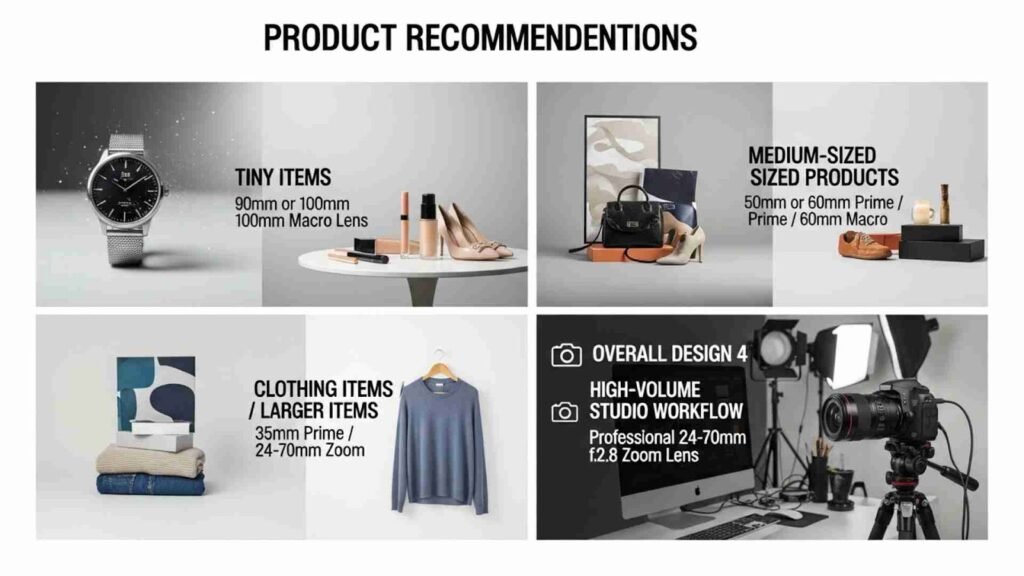
Since every photographer’s needs are different, here are simplified recommendations based on product type:
For jewelry, watches, electronics, or tiny items:
Choose a 90mm or 100mm macro lens.
For medium-sized products like cosmetics, shoes, small accessories, and tabletop items:
Choose a 50mm or 60mm prime or a 60mm macro.
For clothing, packaging, or larger items in small spaces:
Choose a 35mm prime or a 24-70mm zoom.
For studios with high-volume product workflows:
Choose a professional 24-70mm f/2.8 zoom lens.
This makes your buying decision clear and helps you identify the Best DSLR Lens for Product Photography based on your own product categories.
Recommended Lenses, Buying Tips & Final Advice
Now that you understand how macro, prime, and zoom lenses differ, it’s time to get into practical recommendations. This is where most photographers look when searching online for the Best DSLR Lens for Product Photography-because they want a clear idea of which lenses actually perform well in real studios. Instead of overwhelming you with dozens of options, I’ll focus on the lenses that consistently deliver excellent results across different product categories.
Top Macro Lenses for Product Photography
Macro lenses are easily the biggest winners when it comes to sharpness and fine detail. They have become the default choice for serious product photographers-especially those who work with jewelry, beauty products, accessories, or electronics. If you’ve been wondering which macro lenses are considered the Best DSLR Lens for Product Photography, here are the most reliable options.
One of the most popular macro lenses is the Canon EF 100mm f/2.8L Macro. It’s a true workhorse in countless studios. The images are razor-sharp, the colors are clean, and the focusing is quick enough for both photos and videos. Nikon photographers love the Nikon 105mm f/2.8G VR Macro, which offers excellent vibration reduction and equally impressive optical performance. These two lenses consistently outperform many others in close-up detail.
For photographers who want something slightly more affordable, third-party options like the Tamron 90mm Macro and Sigma 105mm Macro offer near-professional quality at a lower cost. Many e-commerce photographers rely on these lenses because they produce professional results without stretching the budget.
Macro lenses, no matter the brand, remain the strongest contender for the Best DSLR Lens for Product Photography if clarity and detail matter most.
Top Prime Lenses for Product Photography
Prime lenses bring simplicity and natural perspective to your product shots. They don’t have the extreme sharpness of macro lenses, but they’re extremely clean, bright, and versatile. For medium-sized product shoots, a prime might even feel like the Best DSLR Lens for Product Photography, especially if you prefer a natural look with less distortion.
The Canon 50mm f/1.8 STM and Nikon 50mm f/1.8G are widely loved for their affordability. They produce crisp images, beautiful colors, and realistic product proportions. They’re ideal for lifestyle product photos, clothing, footwear, bags, bottles, and tabletop items.
If you want a bit more edge and sharpness, the Canon 85mm f/1.8 or Nikon 85mm f/1.8 is are excellent upgrade. Their compression makes products appear proportional and premium, which is ideal for high-end catalogs, lookbooks, or hero images.
Prime lenses rarely disappoint. They are simple to use, lightweight, and perfect for photographers who prefer clean, natural images. For many studios, these primes are strong contenders for the Best DSLR Lens for Product Photography, especially for mid-sized products.
Top Zoom Lenses for Product Photography
Zoom lenses offer unmatched flexibility. They might not reach macro-level magnification, but they are extremely useful when you shoot many types of products with different sizes. If you value convenience and speed, a zoom might be your Best DSLR Lens for Product Photography.
The most popular option is the classic 24-70mm f/2.8. Both Canon and Nikon versions of this lens are industry standards. They are sharp across the frame, adapt to almost any shooting environment, and minimize distortions well. In many studios, this lens stays locked onto the camera all day because it can shoot anything from cosmetics to furniture.
Budget-conscious creators love the Canon 24-105mm or Nikon 24-120mm lenses. They offer a little extra zoom range and are extremely practical for catalog shoots, e-commerce storefronts, and bulk product sessions.
If you run a high-volume studio or shoot products of many sizes, a zoom lens like this could easily become your Best DSLR Lens for Product Photography due to pure efficiency.
How to Choose the Right Lens for Your Studio
Choosing the Best DSLR Lens for Product Photography depends on your specific shooting environment, product type, and workflow. Here is a more human explanation of how to make the right decision.
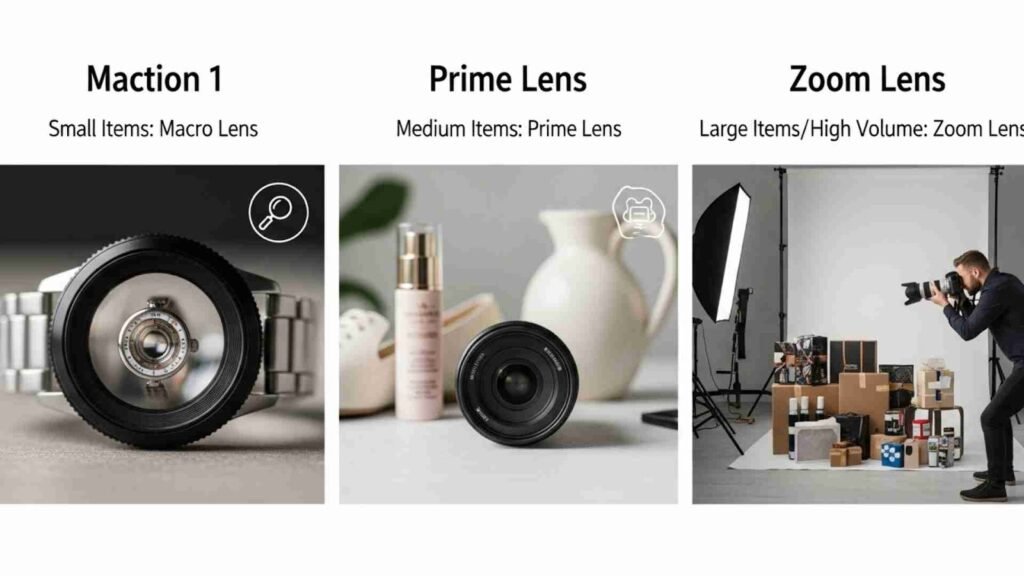
If you mainly shoot small items-like jewelry, accessories, electronics, watches, or skincare macro lens is non-negotiable. You need detail, and only a macro lens can provide the clarity customers expect.
If your work involves medium-sized products-like shoes, cosmetics, ceramic items, packaging, or food-then a prime lens offers a clean, natural, pleasing look that customers trust.
If your studio handles large products or you shoot hundreds of photos per day, a zoom lens provides speed, consistency, and convenience. You won’t waste time adjusting your tripod or lighting because the zoom range handles those adjustments for you.
Always choose based on what will save time, deliver quality, and fit your studio setup. That’s the real secret to finding the Best DSLR Lens for Product Photography for your particular workflow.
Aperture, Lighting, and Background Tips for Better Product Images
A lens is only part of the equation. To get the most out of the Best DSLR Lens for Product Photography, you need to use it with the right settings and lighting.
Most product photographers shoot between f/8 and f/16. This ensures enough depth of field so the product stays perfectly sharp from front to back. Shooting wide open (like f/1.8 or f/2.8) usually creates too much blur for commercial photography.
Lighting matters even more than the lens. Softbox lighting, diffusers, and white reflectors help soften shadows and reduce harsh reflections. Macro lenses especially benefit from soft light because it amplifies detail without making the image too harsh.
A seamless white or light-gray backdrop is the safest choice for most commercial images because it keeps the focus on the product. When using the Best DSLR Lens for Product Photography, proper lighting and background choices ensure your photos meet marketplace standards.
Brand Considerations: Canon vs Nikon vs Third-Party Options
Canon and Nikon both produce world-class lenses. If you’re a Canon user, the Canon 100mm Macro and Canon 24-70mm f/2.8 are almost unbeatable. Nikon users rely heavily on the Nikon 105mm Macro and Nikon 24-70mm.
Third-party brands like Sigma, Tamron, and Tokina have stepped up significantly in recent years. Their lenses offer excellent optical performance at lower prices, making them appealing to both beginners and professionals.
When choosing the Best DSLR Lens for Product Photography, the brand matters less than the actual lens performance. Modern lenses from any major brand deliver outstanding results if matched properly to your product type.
Which Lens Should You Invest In?
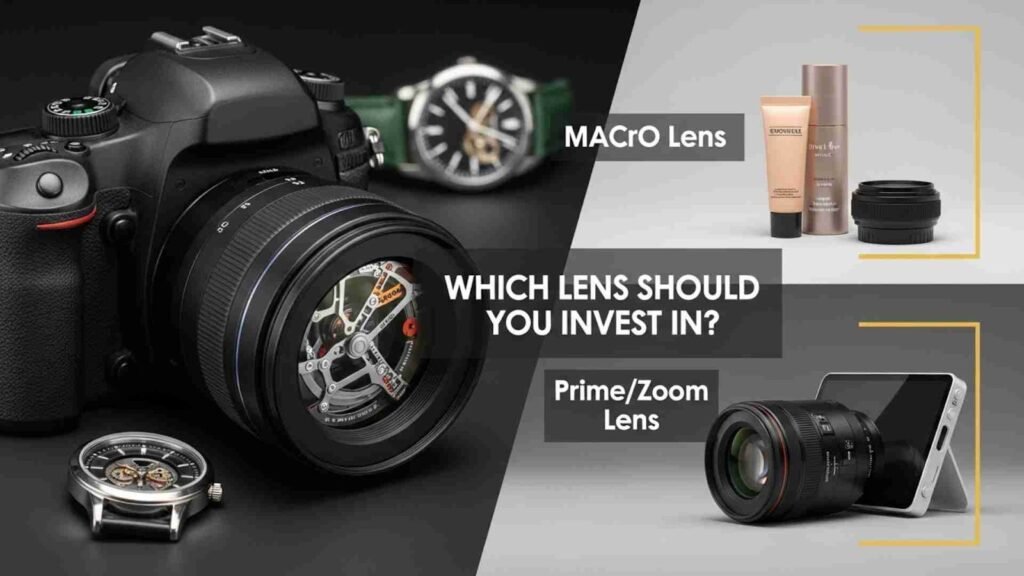
When it comes to value, versatility, and reliability across all product categories, macro lenses consistently emerge as the Best DSLR Lens for Product Photography. They offer the highest detail, the best sharpness, and the most accurate colors.
For medium and large products, prime and zoom lenses enter the conversation. But if you want the most “future-proof” option, the macro lens wins almost every time.
Think of it this way:
A macro lens gives you the ability to shoot anything. A prime or zoom lens may limit you, depending on product size.
Need Professional Editing for Your Product Photos?
Once you’ve used the Best DSLR Lens for Product Photography, the final step is polishing your images. If you want clean backgrounds, color correction, shadow adjustments, blemish cleanup, or fully retouched, marketplace-ready images, aitinsider is here to help.
We specialize in professional image editing for e-commerce brands, including:
- Background removal
- Retouching
- Shadow creation
- Color accuracy
- Product enhancement
- Amazon, Shopify & Etsy optimization
No matter which lens you choose, our editing team ensures your product photos look sharp, clean, and conversion-ready.
Visit aitinsider to get started and take your product photography to the next level.