
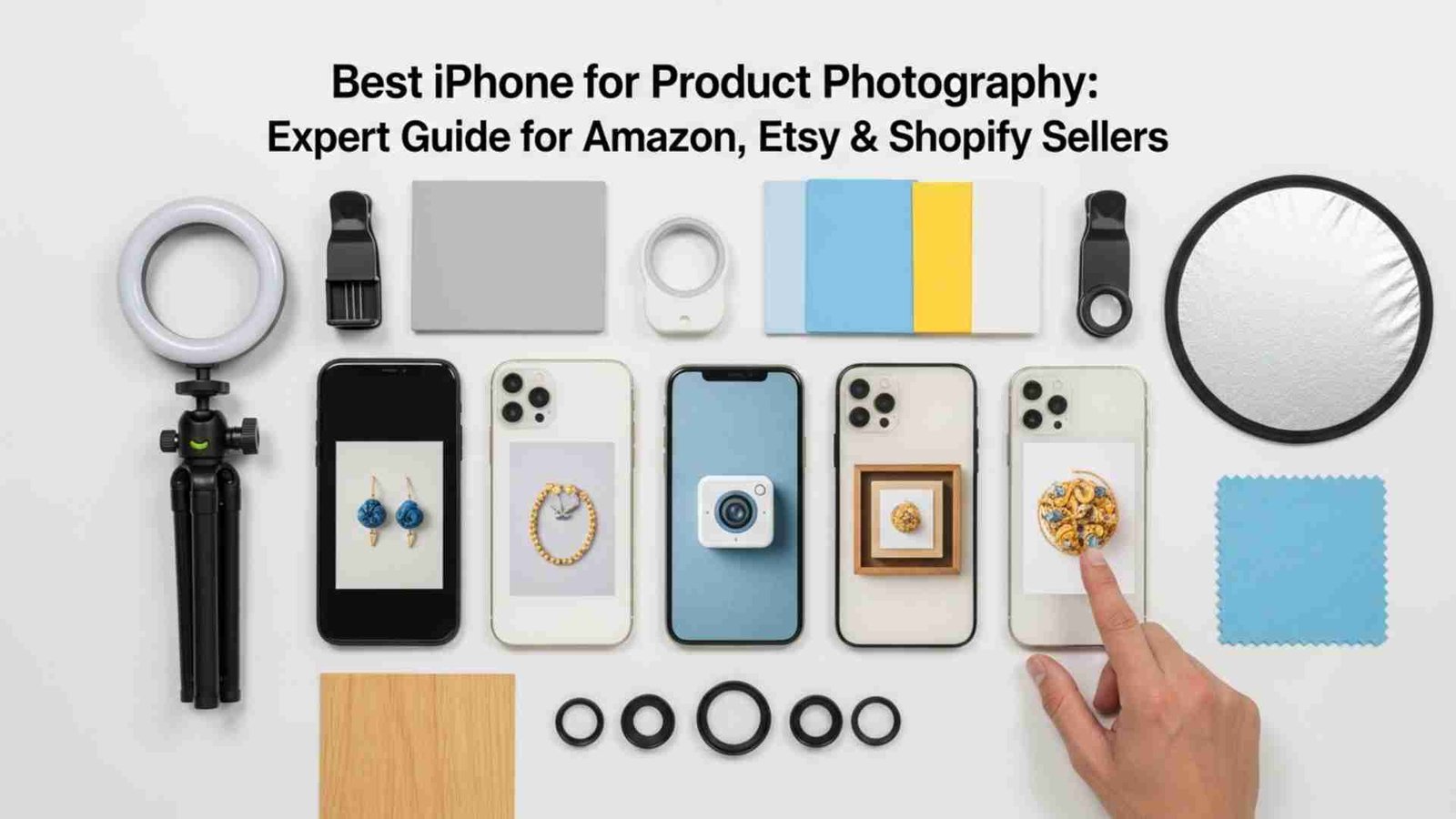
If you’re running an online store on Amazon, Etsy, Shopify, or any e-commerce platform, you already know how important high-quality product images are. Stunning product photos can make the difference between a casual browser and a paying customer. But what if you don’t have a professional DSLR or studio setup? Can you still achieve professional-looking results using just your smartphone? The answer is yes, and in this guide, we’re going to talk about the Best iPhone for Product Photography.
At aitinsider, we understand the challenges online sellers face. Choosing the right iPhone can save time, reduce costs, and produce images that compete with professional photographers. This guide will break down which iPhones excel for product photography, why they perform well, and how to get the most out of them for your Amazon, Etsy, or Shopify store. And because your goal is commercial, we’ll focus on models that deliver real-world advantages for product listing photos.
Over the last few years, iPhones have transformed from simple smartphones into powerful photography tools. Apple’s iPhone cameras are equipped with advanced sensors, multiple lenses, computational photography, and intelligent software that enhance sharpness, color accuracy, and dynamic range. This is why many e-commerce sellers now rely on iPhones for their product photography.
One of the key advantages is convenience. You don’t need to lug around a DSLR, multiple lenses, or heavy lighting equipment to get professional results. With the Best iPhone for Product Photography, you can capture products quickly, make adjustments on the fly, and instantly upload images to your store or social media.
Furthermore, iPhones come with features like Portrait Mode, Smart HDR, and Night Mode, which improve product images in ways that even many DSLR beginners struggle to achieve. These features help maintain consistent lighting, reduce noise, and emphasize product details, making your listings look polished and professional.
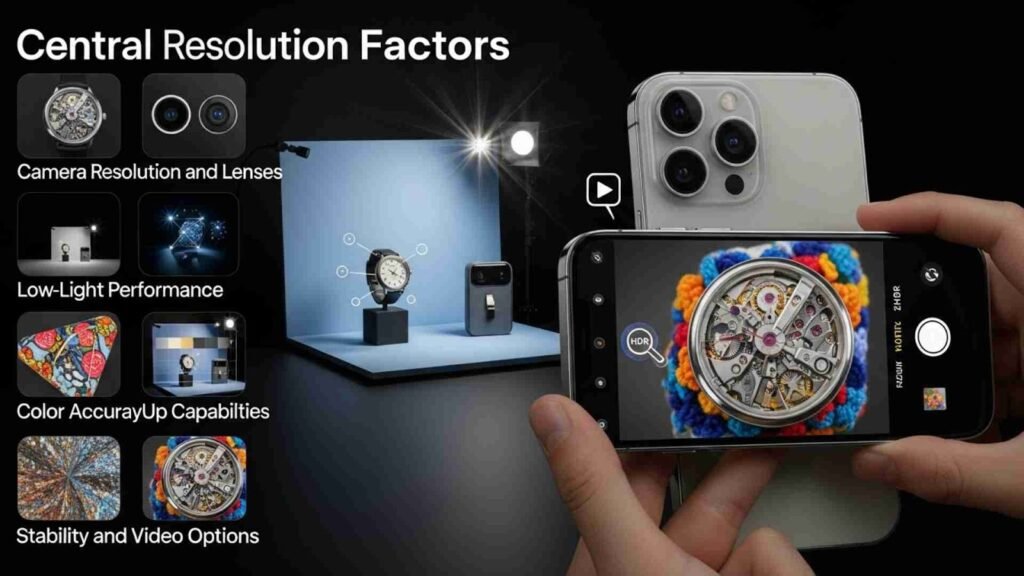
When choosing the Best iPhone for Product Photography, it’s not just about the latest model. There are several key factors to consider:
High resolution ensures your images capture fine details. For example, Apple’s Pro models have multiple lenses, including ultra-wide, wide, and telephoto. These lenses allow for flexibility depending on your product type, whether you’re shooting jewelry, apparel, or larger items.
Telephoto lenses are especially helpful for tight compositions or when you want to focus on product details without distortion. Wide and ultra-wide lenses let you capture larger items or entire setups without stepping back, which is useful if your studio space is limited.
Even small home studios can have inconsistent lighting. A strong iPhone camera, like the ones found on the Pro models, handles low light much better than older devices. Night Mode and computational photography ensure that even in less-than-ideal lighting conditions, your product shots remain clear, bright, and professional.
Accurate colors are essential for product photography. Customers need to see the true color of the product before buying. The Best iPhone for Product Photography includes models with advanced HDR and color science, ensuring that reds, blues, and other vivid shades are represented accurately without over-saturation or unwanted tints.
Macro photography is vital for small products like jewelry, watches, cosmetics, and tech gadgets. Certain iPhone models have upgraded macro capabilities, allowing you to capture extreme close-ups with remarkable detail. This feature alone can make a particular iPhone the Best iPhone for Product Photography for sellers focusing on tiny, intricate products.
While this article focuses on still images, many e-commerce sellers also benefit from video content. iPhones with sensor-shift stabilization allow smooth video captures, which can be repurposed for product demos or social media reels. This versatility makes certain iPhones better choices for multi-functional content creation.
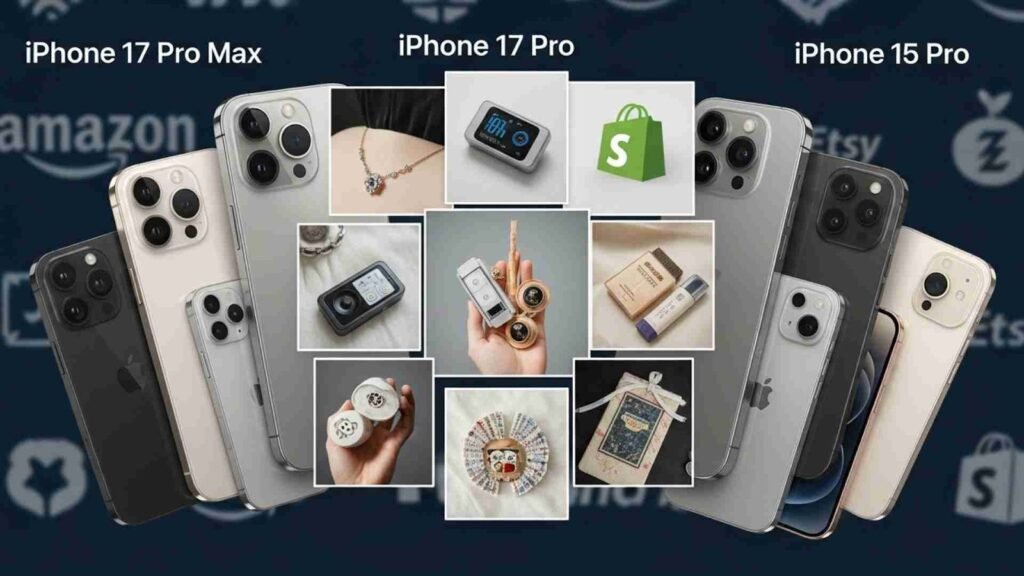
Not all iPhones are created equal when it comes to commercial product photography. Here’s a breakdown of the models most relevant for Amazon, Etsy, and Shopify sellers.
These are currently the top performers in Apple’s lineup. They offer three-camera setups, including ultra-wide, wide, and telephoto lenses. Night Mode, Smart HDR 5, and computational photography produce sharp, true-to-life images. The Pro Max’s larger sensor captures more light, giving better dynamic range and superior detail, which is crucial for small products and reflective surfaces.
A slightly older but still powerful option, the iPhone 16 Pro also features multiple lenses and advanced image processing. It’s slightly more affordable while still delivering impressive detail, color accuracy, and macro capabilities. For sellers who want professional-grade images without paying the highest price, this is often a preferred choice.
The iPhone 15 Pro brings excellent portability and upgraded camera performance. While it may not match the Pro Max for extreme detail in low-light or large products, it’s perfect for smaller studios or sellers on a tighter budget. Its compact size and high-quality camera make it one of the best iPhones for product photography when convenience matters.
Even non-Pro models like the iPhone 15 or iPhone 14 can produce good product images with careful lighting and technique. These devices may lack telephoto lenses or advanced macro capabilities, but they’re still capable of producing professional-looking images for small to medium-sized products.
Sellers just starting or those experimenting with product photography often find these budget-friendly iPhones sufficient until their business grows enough to justify a Pro model.
Once you’ve chosen the Best iPhone for Product Photography, some techniques can help you achieve studio-quality results:
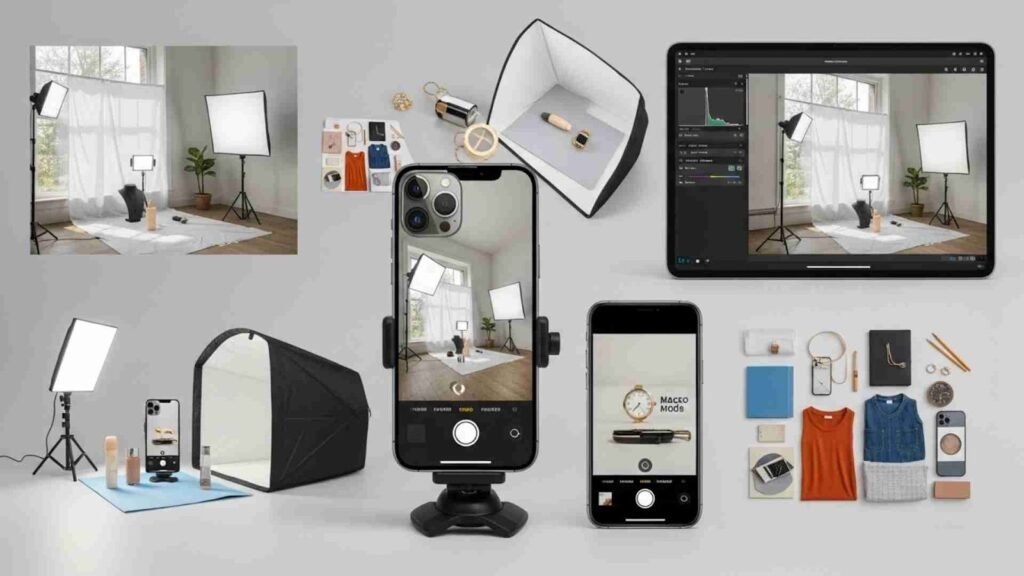
Once you’ve selected the Best iPhone for Product Photography, mastering the techniques is just as important as choosing the right model. Even the most advanced iPhone won’t produce professional-grade product photos if lighting, angles, and composition aren’t handled carefully. Here’s a detailed breakdown to help Amazon, Etsy, and Shopify sellers elevate their images.
Even the Best iPhone for Product Photography cannot compensate for poor lighting. Natural daylight is ideal for small studio setups, but soft artificial lights, like LED panels or ring lights, can provide consistency and control. Diffusers or white sheets help soften shadows and reduce harsh reflections, especially on reflective products like jewelry, glass, or electronics.
Positioning lights at a 45-degree angle from the product can create depth while avoiding overexposure. For shiny items, using a light tent can minimize glare and create clean, professional-looking images.
Sharpness is critical for product images. Even slight hand movements can cause blur. A tripod or smartphone mount is essential for consistent results, particularly when shooting with slow shutter speeds or in low light. Many iPhones have optical image stabilization, but physical stabilization guarantees perfect framing every time.
Apple’s Portrait Mode allows you to create depth and separation between the product and the background. This is particularly effective for jewelry, cosmetics, and small accessories, giving your images a professional studio feel.
Macro mode, available in newer Pro models, allows extreme close-ups without losing sharpness. Small details like textures, threads, or engravings can be captured beautifully, making your product listings more persuasive.
Good composition helps highlight the product’s best features. Shooting at eye-level for larger items like shoes or bottles creates a natural perspective. For flat-lay products like apparel or stationery, a top-down approach works best. Experiment with diagonal angles to show depth and detail, especially for 3D products.
Remember, consistency across your product images builds brand credibility. Maintain a consistent background, lighting, and perspective for all shots in your store.
Even the Best iPhone for Product Photography benefits from post-processing. Minor adjustments like color correction, exposure tweaks, background cleanup, and sharpening can dramatically enhance image quality. Using apps like Lightroom, Snapseed, or professional services like aitinsider ensures that your images are marketplace-ready.
Professional editing helps achieve consistent brightness, removes unwanted reflections or shadows, and maintains accurate color, which is crucial for customer trust.
Here’s how the Best iPhone for Product Photography models perform in typical e-commerce scenarios:
For sellers, it’s important to match the model to your product type and workflow to determine the actual Best iPhone for Product Photography.
When using your iPhone for product photography, efficient workflow is key:
This workflow ensures that whether you’re selling on Amazon, Etsy, or Shopify, your product images are consistent, clean, and professional.
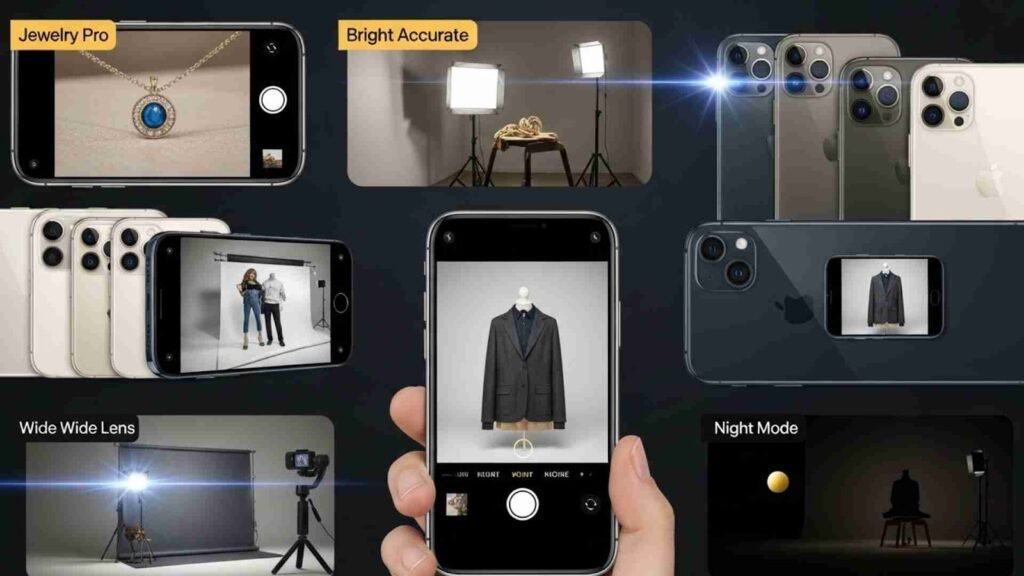
Now that we’ve explored iPhone models, shooting techniques, and workflows, let’s focus on helping you decide which iPhone is truly the Best iPhone for Product Photography for your specific needs, along with professional tips to maximize your results.
Different products benefit from different iPhone capabilities:
By choosing the right iPhone for your product size and type, you can ensure your photos look professional without investing in bulky DSLR equipment.
Even the Best iPhone for Product Photography benefits from professional post-processing. Editing ensures your images meet marketplace standards, look polished, and are consistent across all listings.
Here’s how editing enhances iPhone product photos:
Professional editing services, like those offered by aitinsider, take your already sharp iPhone photos and make them marketplace-ready, helping you increase conversions and create a strong brand presence.
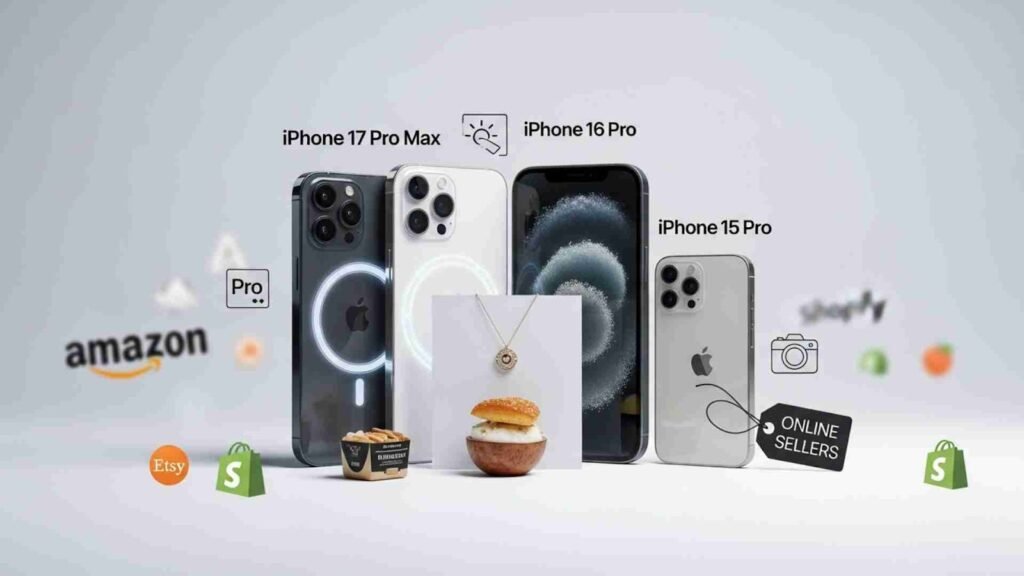
While the latest iPhones deliver the best performance, they aren’t always necessary. Sellers on a budget can achieve professional results with slightly older Pro models or even mid-range iPhones by combining smart shooting techniques and professional editing.
Investing in a high-end iPhone is worthwhile if:
For beginners or smaller stores, pairing an older iPhone with professional editing services like aitinsider can deliver excellent ROI without overspending.
To consistently produce high-quality product photos using your iPhone, keep these tips in mind:
By following these practices, even a mid-range iPhone can produce professional-grade images comparable to DSLR setups.
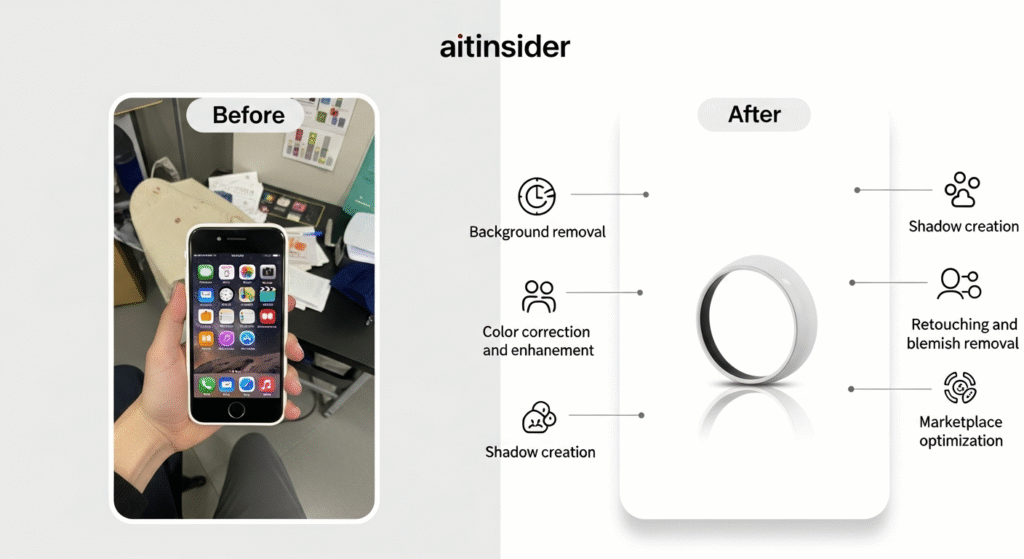
At aitinsider, we specialize in image editing for e-commerce sellers, including Amazon, Etsy, and Shopify. After shooting your products with the Best iPhone for Product Photography, our team ensures your images look flawless and ready for sale.
Our services include:
No matter your iPhone model, aitinsider can elevate your photos to a professional level, ensuring your listings stand out and drive conversions.
Choosing the Best iPhone for Product Photography doesn’t have to be overwhelming. By understanding your product type, selecting the right iPhone model, mastering shooting techniques, and leveraging professional editing services, you can produce stunning, conversion-focused images for Amazon, Etsy, and Shopify.
Remember, the camera is just one part of the equation. Proper lighting, composition, and post-processing are equally important. Pairing your iPhone with the expertise of aitinsider guarantees your product images not only look professional but also help your store succeed.