
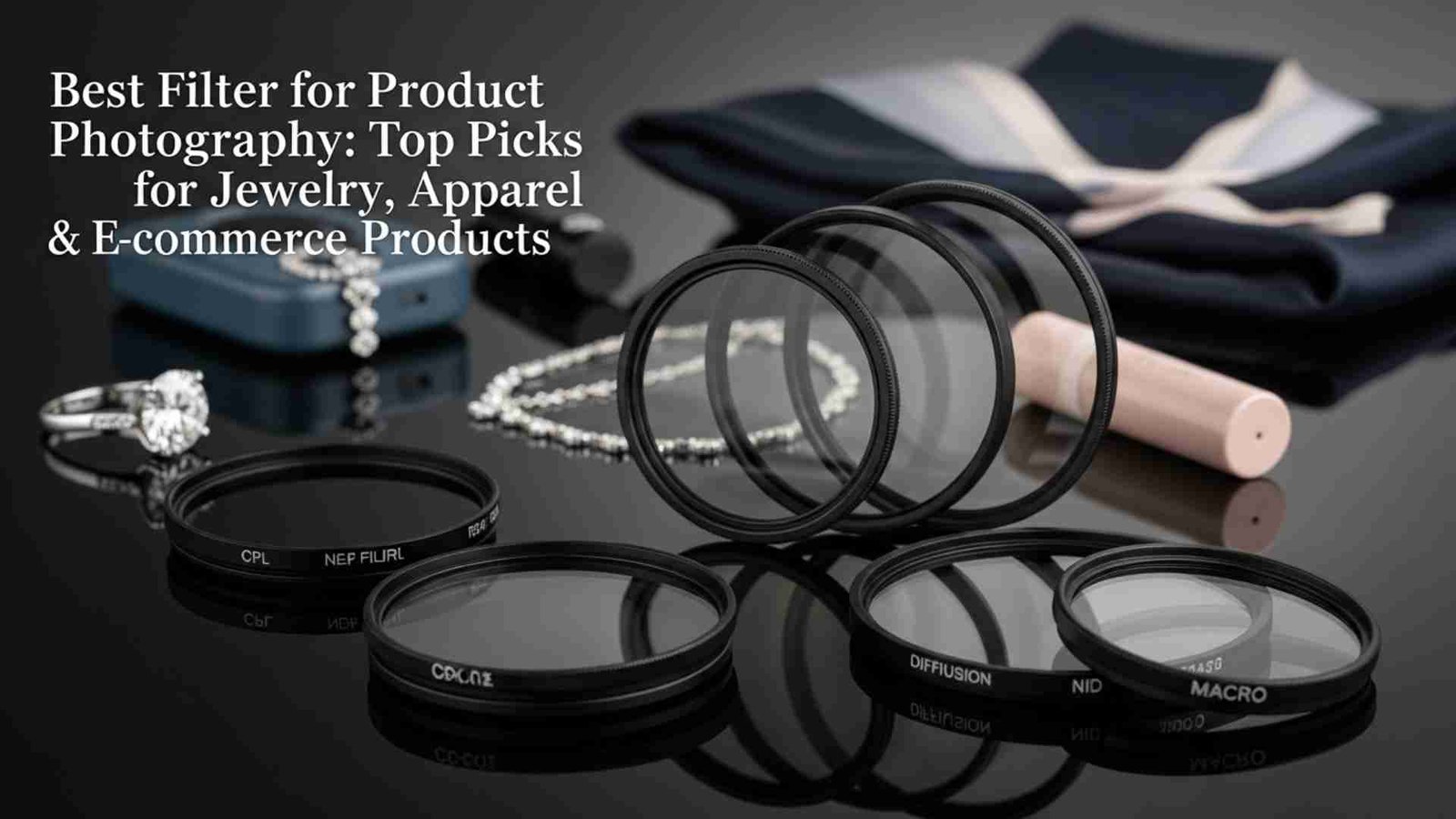
When it comes to improving the clarity, color accuracy, and overall quality of your product photos, choosing the Best Filter for Product Photography can make a much bigger difference than many beginners realize. Whether you’re shooting sparkling jewelry, richly textured apparel, shiny metal products, or general e-commerce items, the right filter helps control reflections, enhance contrast, and create a polished, professional look. In this guide, I’ll walk you through everything you need to know about the Best Filter for Product Photography, explain how each type works, and help you compare the most reliable options available today. Since readers from online stores, small businesses, and creative studios often look for products before making a purchase, this article focuses on commercial intent and clarity.
If you’ve ever wondered why your product photos don’t look as clean, crisp, or color-accurate as professional studio shots, filters might be the missing piece. Even with great lighting, a good lens and the right camera settings, unwanted reflections, color casts, and glare can ruin an otherwise perfect shot. This is where choosing the Best Filter for Product Photography becomes essential.
Filters help you control reflections on shiny surfaces such as jewelry, watches, cosmetics packaging, and polished metal. They also deepen colors, soften harsh light, and give your images a more refined finish. In product photography-especially for e-commerce, where customers rely heavily on visuals-filters help ensure that what buyers see is exactly what they get.
The right filter can turn an average image into a professional one, and that’s why businesses and photographers invest in them. Whether you’re a brand owner, an online seller, or a beginner photographer, understanding the Best Filter for Product Photography will help elevate your entire workflow and brand presentation.
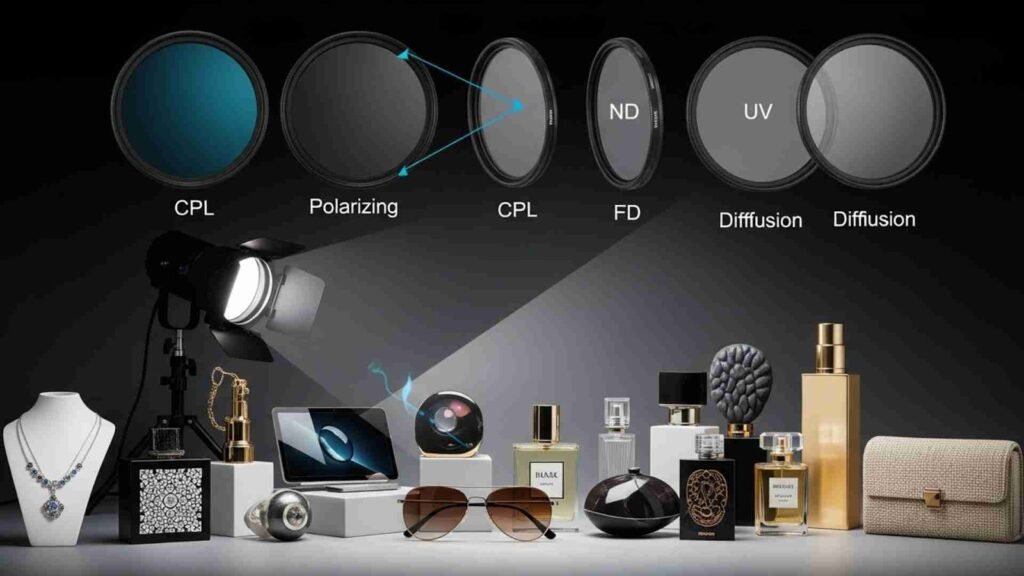
Before comparing specific products, it’s important to understand what filters actually do. Many people assume that filters are only for landscape photographers or for outdoor shooting, but in reality, filters play a huge role in studio product photography as well. Their main function is to control the way light behaves.
When you shoot products, especially reflective items like jewelry, electronics, sunglasses, perfumes, or metallic objects, light bounces off the surfaces in directions you cannot fully control with lighting alone. This creates hotspots, overexposed highlights, and distracting reflections of the studio space. Choosing the Best Filter for Product Photography gives you control over these issues.
A polarizing filter reduces reflections and deepens color saturation. Neutral density filters help you maintain wide apertures in bright environments. UV filters protect your lens and reduce haze. Diffusion filters help soften harsh light and create a clean, natural finish for apparel and textiles.
The more you understand how these tools work, the easier it becomes to choose the Best Filter for Product Photography for your specific needs-because each type is designed for a different problem and a different product category.
There are several filters commonly used in product photography, and knowing what each one does is key to choosing the Best Filter for Product Photography for your studio or brand. Here is a clear and detailed breakdown.
Circular polarizers are the most popular and arguably the Best Filter for Product Photography when dealing with reflective products. A CPL cuts down on reflections by selectively reducing light waves that bounce off shiny surfaces.
When shooting jewelry like rings, gold chains, or gemstones, a polarizer helps reveal texture and color by removing unnecessary glare. It also helps when photographing stainless-steel appliances, tools, watches, phones, and anything made of glass or metal.
For apparel, a polarizer can help deepen fabric colors and keep them natural without boosting saturation artificially. It makes blacks richer, reds more accurate, and blues cleaner.
The only downside is that polarizers reduce the amount of light entering your lens, but since product photography is typically done with studio lights, this is rarely a problem.
ND filters are essential when you want to control exposure without changing your aperture or shutter speed. They are less common in indoor product photography but are still useful when working with extremely bright lights.
If you want a shallow depth of field to make your product stand out, but your lighting setup is too powerful, an ND filter helps reduce the incoming light so you can shoot wide open.
This technique works well for cosmetic products, packaging shots, and lifestyle-style product photos where a smooth background blur is desired. Choosing the Best Filter for Product Photography may include having an ND filter in your kit if you frequently work with bright LEDs or large softboxes.
UV filters do not dramatically affect your exposure or color, but they do reduce haze and protect your lens. Many photographers use them permanently to keep dust, scratches, and fingerprints off the main glass element.
While a UV filter alone is not the Best Filter for Product Photography, it becomes part of a good workflow when shooting daily in a studio environment. It ensures your lens stays clean and clear, which helps keep your product images consistent.
Diffusion filters are great for softening harsh highlights and giving a more natural, gentle finish to product photos. They are especially useful for apparel, fashion accessories, skincare bottles, and lifestyle product images.
These filters slightly blur tiny imperfections in glass, metal, and plastic surfaces, which can help make the product appear more premium without altering its true appearance.
While not used as commonly as polarizers, diffusion filters are often considered part of the Best Filter for Product Photography for brands that want a softer, luxury-oriented look.
Close-up filters act like mini-magnifying glasses that attach to your lens. They are used when shooting small products such as rings, earrings, gemstones, insects for craft stores, or tiny details in electronics.
Instead of buying an expensive macro lens, you can use a high-end magnification filter to get extreme close-ups. These filters are a budget-friendly alternative for beginners searching for the Best Filter for Product Photography without investing heavily in multiple lenses.
Different types of products benefit from filters in different ways. Let’s break it down one by one so you can clearly decide on the Best Filter for Product Photography based on what you sell or shoot.
Jewelry is one of the most challenging categories in product photography because metal and gemstones reflect everything. A circular polarizer is almost always the Best Filter for Product Photography for jewelry, as it removes distracting reflections and helps reveal the gemstone’s depth and clarity.
When photographing diamonds, emeralds, crystals, or silver, a polarizer helps reduce glare so the sparkle becomes controlled and more visually appealing. ND filters are sometimes used when lighting is extremely bright, especially with high-output LED lights or multiple flashes. Diffusion filters can also help soften the harsh reflections that appear on polished surfaces.
Apparel photography benefits most from polarizers and diffusion filters. Clothing often has subtle textures that get lost under strong studio lighting, and fabrics like satin or silk can create bright reflections. A polarizer helps control these reflections and deepen the natural fabric tones, which is why it is often considered part of the Best Filter for Product Photography for clothing brands.
Diffusion filters add softness, making fabrics look richer and more touchable-perfect for brands that want to evoke comfort and premium quality.
Whether you’re photographing electronics, home décor, tools, beauty products, kitchen appliances, or crafted goods, the right filter makes a big difference. Polarizers work well for shiny surfaces, diffusion filters help reduce harsh highlights, and UV filters help maintain clarity. ND filters work well for lifestyle product photos where you want the background to blur naturally.
Choosing the Best Filter for Product Photography depends on the type of product, your lighting conditions, and the style you’re aiming for.
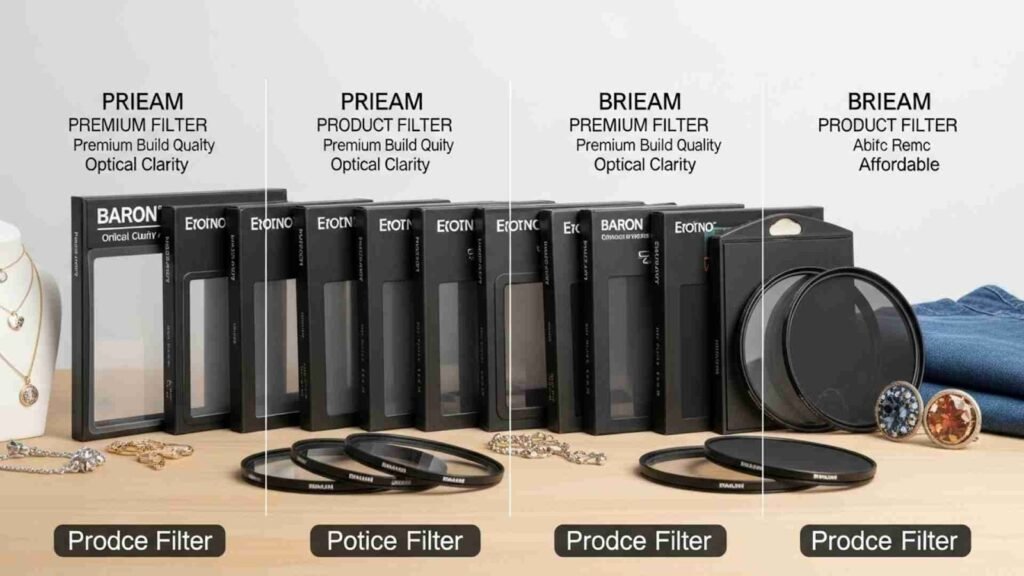
When choosing the Best Filter for Product Photography, it helps to compare real products side-by-side. Today, several brands dominate the filter industry, especially among commercial and studio photographers. Each brand offers something unique, whether it’s premium build quality, better optical clarity, or affordability for beginners. Understanding these differences will help you make a confident purchasing decision-especially if you’re preparing your studio or upgrading your equipment for business use.
In this section, you’ll find detailed comparisons of the most reliable brands and filter types commonly used for jewelry, apparel, and general e-commerce product photos.
Since polarizers are considered the Best Filter for Product Photography for reflective surfaces, let’s explore the top options available today. Each has strengths that matter depending on your budget, shooting style, and product category.
B+W is one of the most trusted names in the photography world because it uses high-quality German Schott glass, known for its clarity and durability. Their circular polarizer is often praised for producing very natural colors without color shift, which is extremely important in product photography-especially for jewelry and apparel where accuracy matters.
If you’re working with metals, gemstones, high-end accessories, or anything glossy, the B+W CPL delivers clean reflections and strong polarization without introducing grain or reducing sharpness. Many professionals consider this one of the Best filters for Product Photography because it balances performance and price.
Hoya offers a slightly more affordable but still high-performing CPL option. Their HD line features tough, scratch-resistant coatings and anti-reflective layers that improve contrast. This filter works beautifully for e-commerce sellers who shoot cosmetics, electronics, packaged items, or shiny materials.
Hoya CPLs are known to be reliable for deepening colors, cutting glare, and enhancing texture. If you’re building a starter or mid-level photography setup, this filter often becomes the Best Filter for Product Photography in terms of performance-to-price ratio.
Tiffen filters are popular among photographers who want decent quality without spending too much on accessories. While the polarization strength may not be as intense as B+W or Hoya, Tiffen still performs well for apparel, soft goods, and matte-finish products.
If you shoot clothing, textiles, bags, shoes, or lifestyle-type e-commerce products, Tiffen can be a cost-effective option. Many beginners consider it the Best Filter for Product Photography when they are working within a budget but still want cleaner results.
Neutral Density filters are less essential than polarizers, but are extremely useful in certain lighting environments. So let’s look at the top ND filters photographers rely on.
Tiffen’s Variable ND is a great option for photographers who want flexibility. You can rotate the filter to adjust the level of light reduction, which helps when switching between different lighting setups.
If you shoot lifestyle product photography or products placed near windows or natural light, this filter allows you to balance exposure while maintaining your desired aperture. For creators who want creamy background blur in their images, this is often the Best Filter for Product Photography for managing light without compromising style.
PolarPro filters are known for premium construction and exceptional color neutrality. Their ND filters do not add color shifts, which is crucial in product photography where accuracy matters. If your brand focuses on high-end cosmetics, fragrances, electronics, or luxury products, this filter will help maintain the true color and personality of the item.
Many professionals consider these among the Best filters for Product Photography when shooting in bright, controlled lighting conditions.
Diffusion filters aren’t as commonly used as CPLs, but they’re essential for brands that want a soft, premium look.
This is one of the most famous diffusion filters in the industry. It creates a soft glow around highlights, reduces contrast slightly, and gives products a luxurious, cinematic feel.
For apparel, skincare bottles, beauty products, and perfume packaging, the Black Pro-Mist filter is often chosen as the Best Filter for Product Photography because it smoothens harsh reflections without making the product look artificial.
Moment’s CineBloom filter gives a smoother, dreamier look that many modern brands love-especially those in fashion, lifestyle, home décor, and organic products. It softens the overall image but maintains sharpness in essential details.
If your brand wants an aesthetic, Instagram-friendly, or naturally-lit look, this may be the Best Filter for Product Photography for your creative style.
Macro-style product shots often require expensive lenses, but high-quality close-up filters offer a budget-friendly solution.
NiSi’s kit attaches to your existing lens and turns it into a powerful macro lens. This is perfect for jewelry photographers, Etsy sellers, and crafters who need extreme detail without investing in a dedicated macro lens.
For small gemstones, fine jewelry details, intricate textures, and small product engraving, NiSi is often regarded as the Best Filter for Product Photography for tight close-ups.
Hoya’s set is great for beginners who want flexibility and affordability. The filters come in different magnification levels, so you can choose how close you want to get.
These work well for shooting beads, accessories, miniatures, handmade crafts, and detailed textures. Many new photographers consider these the Best Filter for Product Photography when testing close-up styles before upgrading equipment.
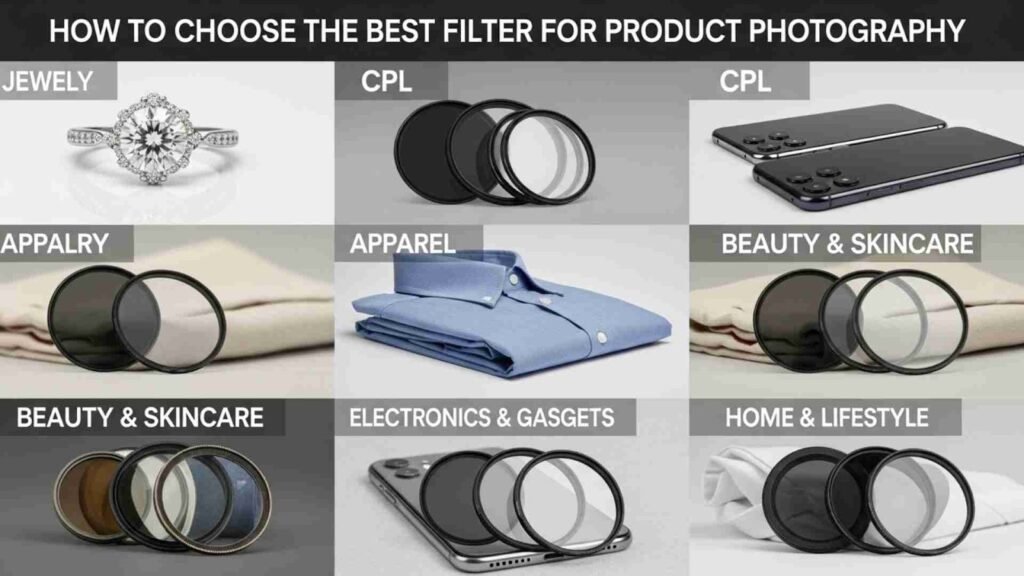
Different products benefit from different filters, so here’s how to identify which one you should invest in depending on what you shoot.
Jewelry is almost always photographed using a circular polarizer. It helps control reflections on metal and enhances gemstone clarity. If you often deal with diamonds, crystals, or silver pieces, choosing the Best Filter for Product Photography usually means choosing a strong CPL with excellent color neutrality.
For gemstones that sparkle intensely under LED or flash lighting, an ND filter may also be helpful to balance exposure.
Clothing requires soft, even light. A polarizer helps prevent fabrics from looking washed out or overly shiny under bright studio lighting. Diffusion filters can add a smooth, premium finish that makes clothing appear rich and natural.
For fashion brands, a combination of CPL and diffusion may be the Best Filter for Product Photography, depending on your lighting setup.
Beauty products often come in reflective bottles or containers. This creates harsh highlights that can distract from the product’s branding and design. A circular polarizer removes unnecessary reflections, while a diffusion filter helps soften the glow for a luxury feel.
This combination is frequently considered the Best Filter for Product Photography for the beauty industry.
Phones, earbuds, metal speakers, smartwatches, and gadgets all reflect their surroundings. A CPL filter is essential here to clean up the reflections and help the product’s design stand out. UV filters are also helpful for maintaining lens clarity during long studio sessions.
For modern tech products, these tools create the Best Filter for Product Photography experience.
Depending on your style-clean and sharp or warm and soft-you may use either a CPL or a diffusion filter. Home décor items often benefit from soft lighting, while shiny or polished materials work better with polarization.
Choosing the Best Filter for Product Photography for lifestyle brands depends on whether your product includes reflective surfaces or textured materials.
With so many filter types and brands available, choosing the Best Filter for Product Photography can feel overwhelming. The key is to match the filter to your product type, lighting setup, and creative goals. Product photographers-from beginners to studio professionals-often end up buying multiple filters because each one solves a different problem. In this buying guide, I’ll break down the essential factors you should consider before purchasing so that you can invest wisely and get the best results.
The first decision is understanding what your products actually need. Jewelry requires strong reflection control, apparel needs soft and accurate color representation, and e-commerce products need a clean, distraction-free finish. No single filter works for everything, so identifying your category is the first step toward choosing the Best Filter for Product Photography for your workflow.
Next, consider your lighting environment. If you use continuous LED lights, you may face intense reflections that can overpower your highlights, making a circular polarizer essential. If you use natural light or a setup with multiple softboxes, diffusion filters may help you soften hot spots. For bright, outdoor lifestyle product photos, ND filters help control exposure while maintaining a shallow depth of field. Understanding how your lighting interacts with your products ensures you invest in the right filter from the start.
You should also consider build quality. Filters made from cheap glass or plastic will degrade image quality, introduce color shifts, or reduce sharpness. Since product photography relies on precision and clarity, always choose filters with multi-coated glass, strong metal frames and proven optical consistency. These may cost more upfront, but the difference in quality is visible in every shot. Investing in durable, high-quality accessories is part of choosing the Best Filter for Product Photography for professional use.
Lens compatibility is another important factor. Always match the filter size to your lens diameter, which is usually printed on the front or side of your lens (for example: 49mm, 67mm, 72mm, 82mm). Using an incorrectly sized filter will require step-up or step-down rings, which can cause vignetting. To maintain clarity and edge-to-edge sharpness, it is better to buy filters that naturally fit the lens you use for product photography.
Finally, think about your budget. High-end filters provide the cleanest results, but mid-range filters are often more than enough for e-commerce studios and beginners. The Best Filter for Product Photography is not always the most expensive-it’s the one that solves the biggest problem in your workflow. If reflections are your issue, invest in a polarizer. If harsh highlights are your issue, invest in a diffusion filter. If your lighting is too bright, invest in an ND filter. Tailoring your purchase to your needs is always the smartest choice.
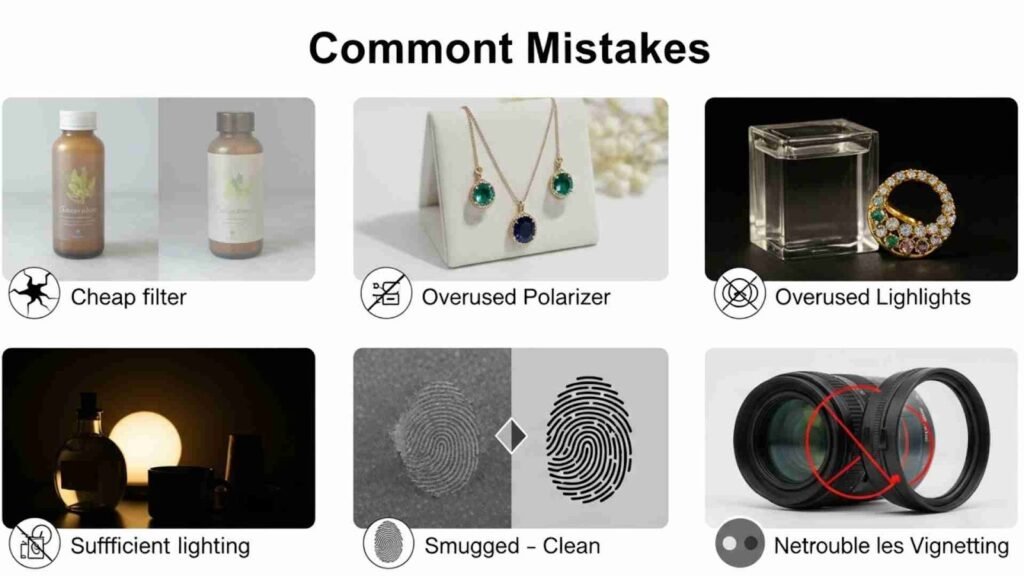
Even after selecting the Best Filter for Product Photography, many photographers make mistakes that limit the quality of their images. Avoiding these common issues will save you time and help you produce consistent, professional-looking product photos.
One of the biggest mistakes is buying cheap filters with low-quality glass. These filters often introduce haze, reduce sharpness or create unwanted color casts that distort your product’s actual appearance. Since product photography is all about accuracy and consistency, using low-quality filters can hurt your brand image. Always invest in filters from reputable brands with good optical coatings, especially if you’re shooting jewelry, beauty products, or reflective surfaces.
Another mistake is overusing the polarizer. While a CPL is the Best Filter for Product Photography when dealing with reflections, using it too aggressively can remove natural highlights that give products their shape and dimension. For example, a jewelry photo without any highlights can look flat and lifeless. Always rotate the polarizer gradually until the reflections are controlled but not eliminated.
Some photographers also forget that filters reduce the amount of light entering the lens. Polarizers and ND filters both darken the image to some extent. If your studio lights are not strong enough, using these filters may force you to raise ISO or lower shutter speed, which can reduce image quality. Always balance your lighting setup with the filter you choose.
Improper cleaning is another issue. Filters gather dust, fingerprints, and smudges easily, and even a tiny spot can create blur or glare in your final image. Many photographers think their lens is dirty when in reality, the filter is the problem. Always clean your filters gently with microfiber cloths and proper lens-cleaning solutions before every session.
Lastly, many beginners forget that filters stack. Using multiple filters at the same time-such as a UV filter plus a CPL, plus a diffusion filter-can create vignetting or reduce sharpness. While it’s possible to use two filters at once, stacking too many can affect image quality. For the cleanest results, keep your setup simple and use only the filters you truly need. This is especially important when striving to use the Best Filter for Product Photography effectively.
Even if you have the Best Filter for Product Photography, knowing how to use it properly will dramatically improve your results. Here are expert-level tips used by professional product photographers in studios and commercial settings.
Always adjust your polarizer while looking through the viewfinder or screen. Rotating the CPL changes the level of reflection reduction, and even a slight adjustment can make a major difference in jewelry and metallic items. Spend time fine-tuning this rotation until the reflections are clean but the product still looks natural.
Position your lights carefully. Filters do not replace good lighting-rather, they enhance it. For jewelry and shiny objects, place lights at angles that avoid direct reflection toward the lens. Once your lighting is set, use your filter to fine-tune the final look.
Pay attention to color accuracy. Filters should not drastically change your product’s color. If you notice color shifts, adjust your white balance manually or use color calibration tools. This ensures your product photos remain true to life, which is vital for customer trust and conversions.
Experiment with diffusion strength. Diffusion filters come in different intensities, such as 1/4, 1/2, or 1. A stronger diffusion creates a softer image but can reduce contrast, while a lighter diffusion keeps most details intact. For apparel and beauty products, a medium diffusion often works best. For shiny or metallic products, lighter diffusion may be more appropriate.
Maintain consistent shooting conditions. Filters work best when your lighting setup, background, and camera settings remain consistent across images. This ensures your e-commerce store looks professional and cohesive. Consistency is often the reason professional studios achieve such clean, polished results with the Best Filter for Product Photography.
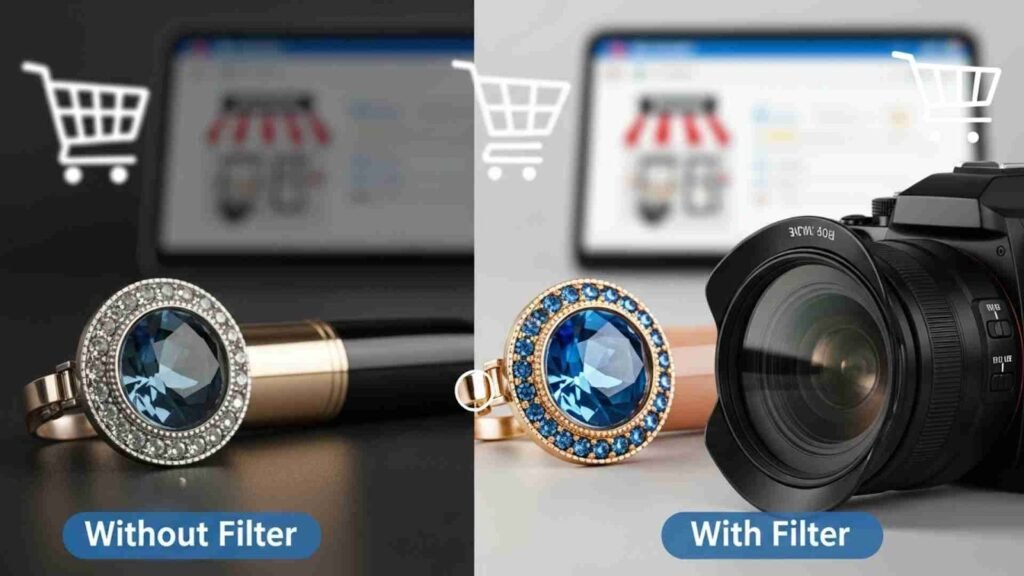
Some beginners wonder whether filters are essential at all. The truth is, while product photography can be done without filters, they make a noticeable difference in clarity, professionalism, and color accuracy. A filter enhances what your camera and lighting already do well, helping you produce polished images that match the standards of top brands.
Jewelry photographers almost always use CPL filters. Apparel photographers often use diffusion filters. Beauty and cosmetic photographers rely on both for their precise, soft style. And e-commerce brands that deal with shiny or textured products use filters to ensure their images look clean and consistent across every listing.
If you want your store to stand out, choosing the Best Filter for Product Photography is not optional-it’s a smart investment that pays off in better conversions, stronger branding, and more customer trust.
Choosing the Best Filter for Product Photography ultimately depends on your product type, lighting setup, and style preference. Circular polarizers are essential for jewelry and reflective surfaces. Diffusion filters are perfect for apparel and beauty products. ND filters help control exposure in bright environments, and close-up filters allow for detailed shots of small items. What matters most is understanding how each filter enhances your product and helps you achieve clean, consistent, high-quality images.
Whether you are a small business owner, an online seller, a product photographer, or a brand building its visual identity, investing in the right filter is one of the easiest ways to elevate your photos without buying new cameras or lenses. It’s a simple upgrade that delivers huge results.
If you want your product photos to look stunning, clean, and professionally polished-even after using the Best Filter for Product Photography team at aitinsider is here to help. We specialize in image editing, background removal, retouching, color correction, shadow creation, and high-end product enhancements for e-commerce brands.
Whether you shoot jewelry, apparel, beauty products, or general merchandise, we can transform your images into conversion-focused photos that boost sales and brand trust.
Visit aitinsider today and take your product visuals to the next level.