

If you sell products online or create content for e-commerce, social media, or catalogs, you already know how important great visuals are. Clean, sharp, and well-lit product images can instantly build trust and increase sales. Today, you don’t always need expensive cameras or complicated software to achieve professional results. With just your smartphone and the Best App for Product Photography, you can dramatically improve how your products look.
Many people feel overwhelmed when choosing the Best App for Product Photography because there are so many options available. Some focus on background removal, others on color correction, retouching, or lighting adjustments. Each app claims to be “the best,” but in reality, the best choice depends on your needs, skill level, and budget. That’s exactly why this guide was created-to help you understand which tools truly stand out and how they compare in real-world use.
In this in-depth article, we will explore what makes an app the Best App for Product Photography, compare the most popular editing tools, and clearly explain their features, advantages, and limitations. Whether you’re a beginner, a small business owner, or a professional photographer, this guide will help you make an informed decision with confidence.
What Makes the Best App for Product Photography Truly “Best”?
Before comparing specific tools, it’s important to understand what actually defines the Best App for Product Photography. A good product photography app must do more than add filters or basic edits. It should help create clean, realistic, and market-ready images that look professional and trustworthy.
The most important feature is background control. Many product photos need a pure white or transparent background to meet e-commerce platform requirements. The Best App for Product Photography should remove backgrounds cleanly without damaging product edges or textures. Another critical aspect is lighting and shadow control. Even if you shoot in low light, a strong app should be able to balance exposure, fix harsh shadows, and enhance highlights naturally.
Color accuracy is another major factor. Product images must show true colors so customers receive what they expect. A reliable Best App for Product Photography preserves natural tones while allowing subtle enhancements. Finally, ease of use matters. A cluttered or complicated interface can slow you down and reduce productivity. The best apps strike a balance between advanced tools and simple operation.
Why Using the Best App for Product Photography Matters for Online Success
In today’s digital marketplace, visuals are often the first interaction a customer has with your brand. Blurry, poorly edited, or inconsistent images can instantly push users away. On the other hand, high-quality images build confidence and increase conversion rates. This is why choosing the Best App for Product Photography is not a small decision-it directly impacts your sales and brand reputation.
When you use the Best App for Product Photography, you gain more than just better images. You save time by editing quickly on your phone, reduce dependency on expensive software, and maintain consistent visual branding across platforms like Amazon, Etsy, Shopify, Facebook, and Instagram. For small businesses and solo entrepreneurs, this is especially important because it allows a professional presentation without a large budget.
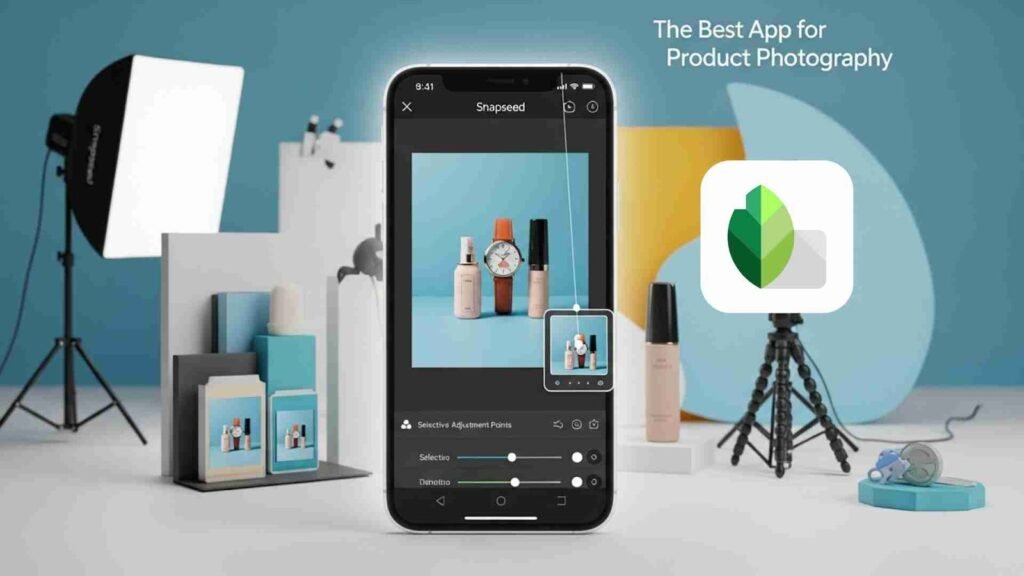
Snapseed as a Best App for Product Photography: Features, Pros, and Cons
Snapseed, developed by Google, is often considered a top contender for the Best App for Product Photography, especially for beginners and intermediate users. It offers powerful editing tools in a simple, user-friendly interface. The app provides features like selective lighting, healing, precise color adjustments, and sharpness control.
One of Snapseed’s strongest advantages is its precision editing. You can make targeted adjustments to specific areas without affecting the whole image. This is extremely useful for enhancing a product while keeping the background clean and neutral. Snapseed is also completely free, which makes it attractive for startups and small sellers.
However, Snapseed does have some limitations as the Best App for Product Photography. It does not include advanced background removal or automatic object cut-out features. If you require transparent backgrounds for marketplaces like Amazon, you may need an additional app or manual masking, which can be time-consuming.
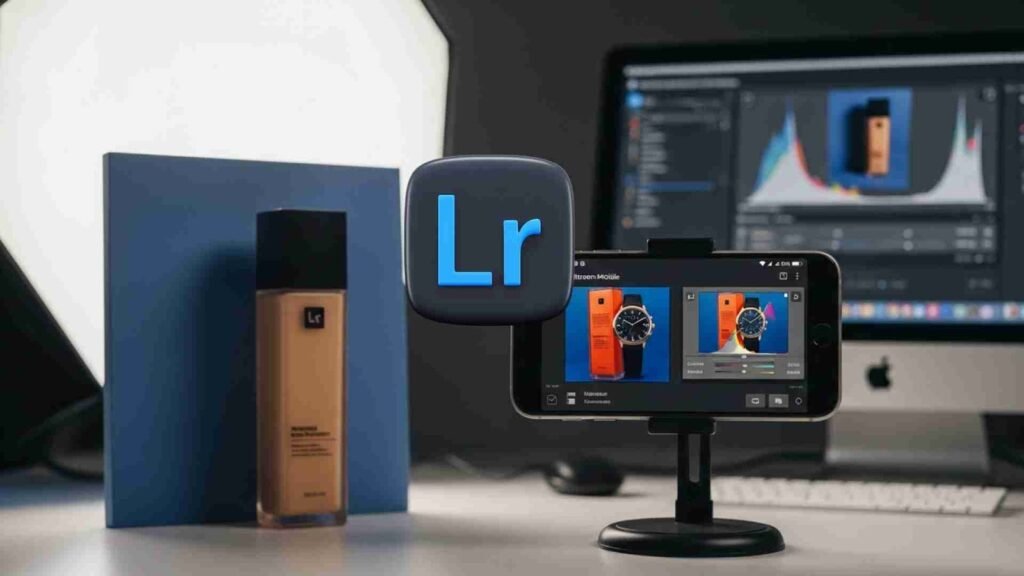
Adobe Lightroom Mobile is the Best App for Product Photography Professionals Prefer
Adobe Lightroom Mobile is widely considered one of the most powerful options for the Best App for Product Photography. It offers advanced color correction, exposure balancing, clarity control, and professional-grade presets. Many photographers use Lightroom on both desktop and mobile for seamless workflow.
The biggest strength of Lightroom as the Best App for Product Photography is its color accuracy and lighting control. You can fine-tune temperature, tint, highlights, shadows, and contrast to make your products look sharp, vibrant, and realistic. The app also supports RAW photo editing, which is ideal for professional shooting.
On the downside, Lightroom Mobile requires a subscription to unlock its full potential. While the free version is useful, many advanced tools like selective adjustments and healing are locked behind a paywall. For casual users, the learning curve may also feel slightly steep compared to simpler apps.
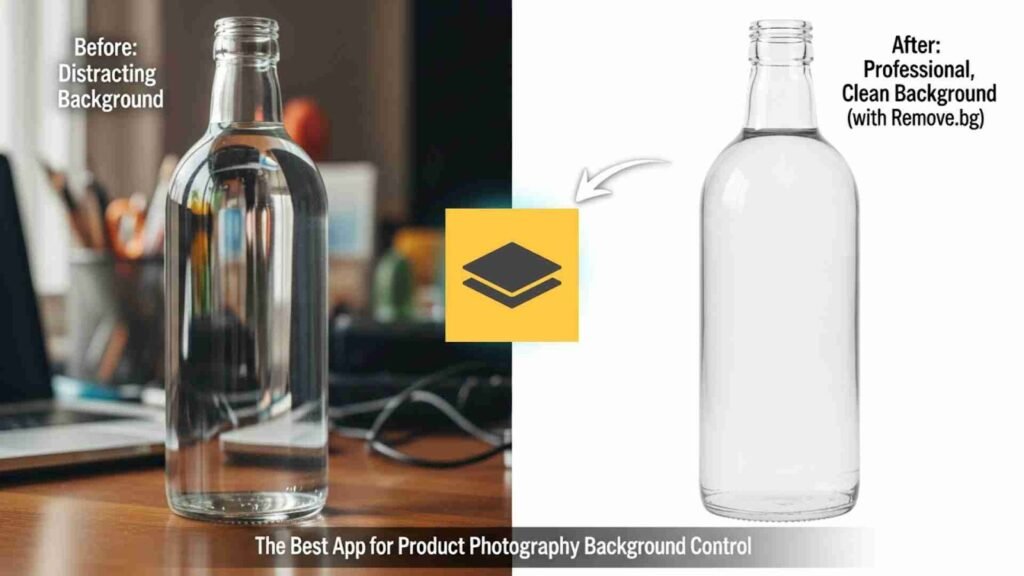
Remove.bg and Similar Apps as the Best App for Product Photography Background Control
Background removal is one of the most common needs in product photography, especially for e-commerce platforms. Apps like Remove.bg, PhotoRoom, and Pixelcut often compete for the title of Best App for Product Photography in this category.
These apps excel at automatic background removal using AI technology. With just one tap, they can remove complex backgrounds and replace them with white, transparent, or custom scenes. This makes them extremely popular among online sellers who need fast results at scale.
The main advantage of using these tools as the Best App for Product Photography is speed. You don’t need advanced editing skills or manual masking. However, the main drawback is that edge detection can sometimes fail on transparent, reflective, or very detailed products. Many of these apps also require a paid plan for HD exports, which can add to your monthly costs.
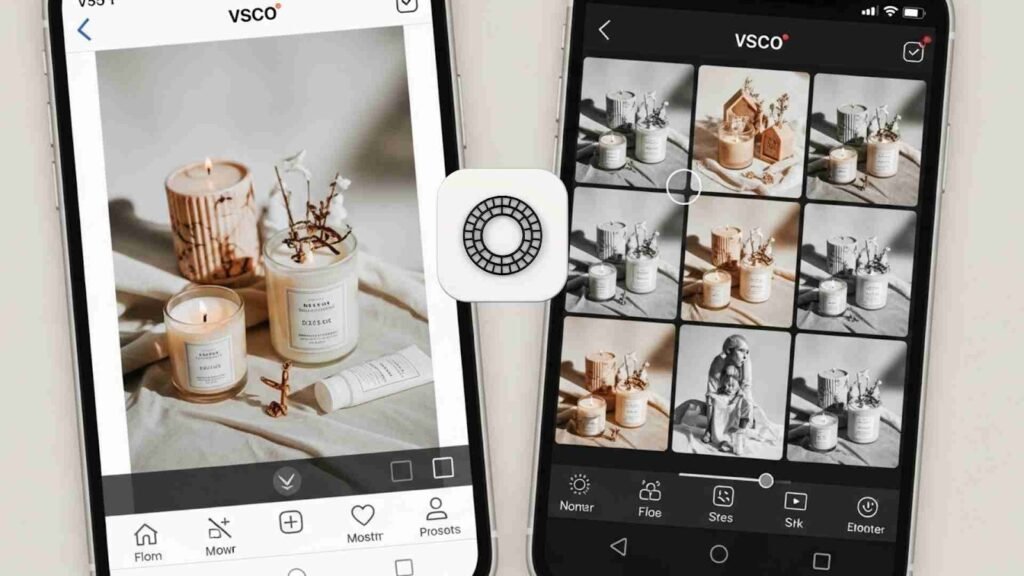
VSCO is the Creative Best App for Product Photography
VSCO is another popular name often mentioned in discussions about the Best App for Product Photography, especially among content creators who focus on branding and social media aesthetics. The app is known for its beautiful presets and fine control over tone and contrast.
VSCO works well for lifestyle product photography, where mood and branding are more important than strict marketplace guidelines. Its clean interface and film-style filters can help create a consistent visual theme across your product catalog.
However, as the Best App for Product Photography for e-commerce, VSCO is somewhat limited. It lacks advanced background removal, object isolation, and detailed retouching tools needed for marketplace-ready images. It is better suited as a complementary tool rather than a complete editing solution.
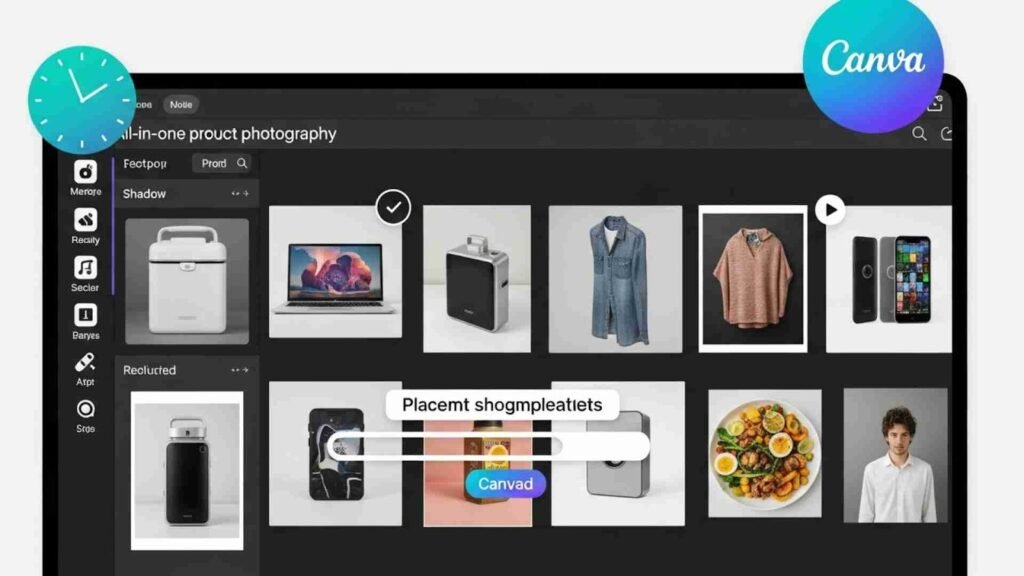
Canva is an All-in-One Best App for Product Photography and Design
Canva has grown far beyond a basic design tool and is now widely used as a Best App for Product Photography due to its photo editing and layout features. It allows users to edit images, remove backgrounds, add shadows, and place products into ready-made templates for ads and social posts.
The biggest strength of Canva as the Best App for Product Photography is its simplicity and speed. You can go from raw image to marketing-ready design within minutes. It is especially useful for sellers who create banners, promotional graphics, and social media ads alongside standard product photos.
The limitation is that Canva’s photo editing precision is not as advanced as Lightroom or Snapseed. While it works very well for general use, professional photographers may find that it lacks detailed control over color grading and texture.
How to Choose the Best App for Product Photography for Your Needs
Choosing the Best App for Product Photography is not about picking the most popular name-it’s about matching the tool to your specific workflow. If your goal is simple color correction and lighting adjustment, Snapseed or Lightroom may be ideal. If your focus is fast background removal for online stores, PhotoRoom or Remove.bg might be your best choice.
If you are creating social media ads and branded visuals along with product photos, Canva could be the Best App for Product Photography for you. For professionals working with RAW images and precise color profiles, Lightroom Mobile is often the top choice.
You should also consider your budget, device storage, and skill level. Many users find success by combining two or three apps to create a complete workflow. For example, using Remove.bg for background removal and Lightroom for color grading can deliver excellent results.
The Realistic Pros and Cons of Using Only an App for Product Photography
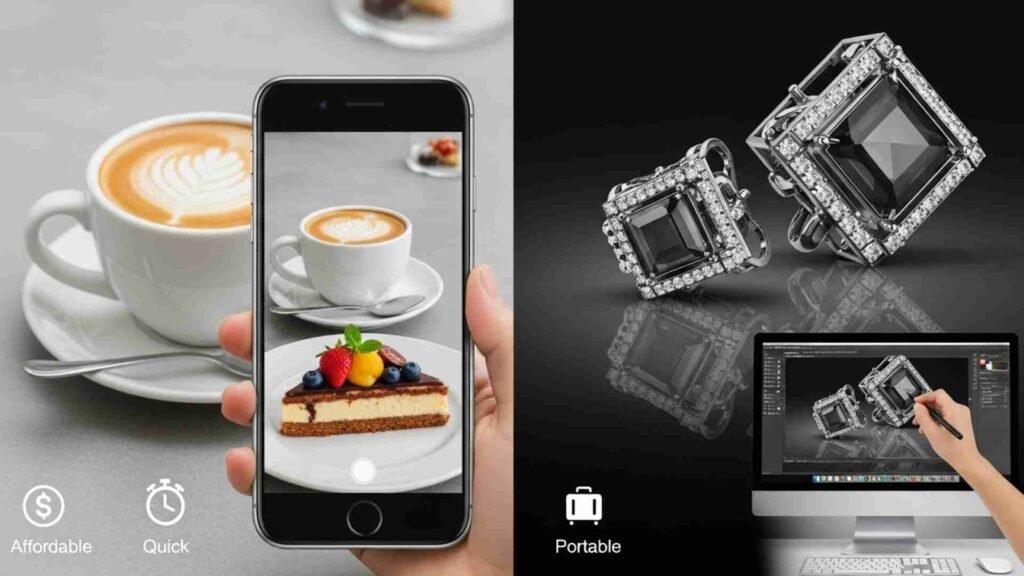
Using the Best App for Product Photography offers incredible convenience, but it also has realistic limitations. On the positive side, apps are affordable, portable, and quick. You can shoot, edit, and publish from one device without complex software. For small businesses, this efficiency is a huge advantage.
However, apps cannot always replace professional image editing for high-end commercial needs. Extremely detailed retouching, complex shadows, and advanced compositing may still require desktop tools like Photoshop or professional editing services. That’s why many businesses use apps for quick edits and rely on professional services for premium campaigns.
Why Many Brands Still Combine the Best App for Product Photography with Professional Editing
Even when using the Best App for Product Photography, many brands eventually reach a point where they need more consistency, scalability, and polish. This is where professional image editing services become essential. Apps can handle everyday edits, but when you need bulk image processing, perfect masking, or magazine-level finish, human expertise makes a big difference.
Brands often use apps to create quick drafts and previews, then send their final selections to a professional editing team for refinement. This hybrid approach keeps workflows fast while maintaining top-tier quality.
Final Thoughts So Far on the Best App for Product Photography
The Best App for Product Photography is not the same for everyone. Each app discussed in this guide-Snapseed, Lightroom, Remove.bg, VSCO, and Canva-offer unique strengths and cater to different user needs. What matters most is understanding your own requirements and choosing the tool that helps you achieve consistent, professional-looking product images.
In the next part of this article, we will dive deeper into real-world use cases, compare performance for different product types like jewelry, clothing, and electronics, and explain how to build the perfect mobile editing workflow using the Best App for Product Photography.