
If you’re trying to figure out the Best Angles for Product Photography, you’re probably comparing techniques to make your product photos look more professional and more profitable. That’s a smart move, because angles play a huge role in how customers perceive value, quality, and scale. When selling online, whether through Amazon, Shopify, Etsy, or your own website, the right product photography angle can increase conversions, reduce returns, and help your brand stand out.
In this guide, we’ll explore the Best Angles for Product Photography from a commercial perspective, using simple language and friendly explanations. Whether you’re a brand owner, online seller, or beginner photographer, this article will help you understand why certain angles boost sales and how you can use them in your own shoots. Since this content is created for aitinsider, we’ll also show you how professional editing enhances these angles even more.
Let’s dive in and explore the angles customers trust and the angles that guide buying decisions.
Why Angles Matter in Product Photography
Understanding the Best Angles for Product Photography is not just about creativity; it’s about psychology and clarity. When customers look at a product online, they can’t touch it, weigh it, or inspect it with their hands. That means your images have to do all the explaining.
Angles help the customer understand shape, size, design, features, and texture. A good angle builds trust. A bad angle causes confusion. And confusion leads to fewer sales.
When an angle is chosen thoughtfully, it highlights your product’s strengths and hides distracting flaws. It also helps create a sense of space and dimension. Think about how often you look at a product listing and feel unsure about how big it actually is. Those unanswered questions cost sellers thousands of dollars every year.
That is why brands, e-commerce businesses, and professional photographers pay so much attention to finding the Best Angles for Product Photography. Even small improvements in angles often generate more conversions than camera or lens upgrades.
How E-Commerce Platforms Influence Angle Choices
Different e-commerce platforms have specific image requirements, but angle preferences are surprisingly universal. For example, Amazon strongly prefers clean white backgrounds with front-facing, perspective, and detail views. Shopify stores tend to use more lifestyle angles to tell brand stories. Etsy often features softer, natural angles that appeal to handmade or vintage aesthetics.
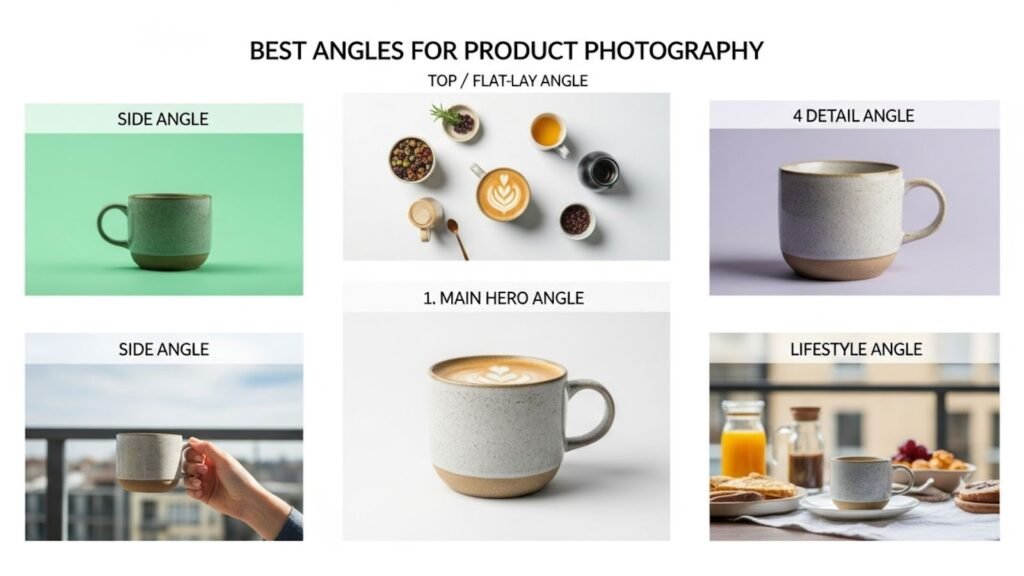
No matter the platform, the Best Angles for Product Photography are always the ones that answer your customer’s questions before they even ask them. That means your photography should show:
• The main hero angle (the primary “buy me” view)
• The side angle to reveal the shape
• The top or flat-lay angle for completeness
• The detail angle for textures and features
• The lifestyle angle for context
We’ll break down each of these deeply and explain how each contributes to product trust, visual appeal, and sales performance.
The Front Angle: The Most Essential Angle in Product Photography
The front angle is the most traditional, straightforward angle. It’s the hero view on almost every product page. Customers rely on this angle to understand the basic identity of the product. If you had to choose one image to represent your product everywhere, from your website to ads to packaging, this is it.
This angle is often considered the backbone of the Best Angles for Product Photography because it sets the first impression. A well-shot front angle communicates professionalism immediately. It tells the buyer: “This brand cares about quality.”
For small items like cosmetics or skincare, the front angle must show labels clearly. For fashion items, it must reveal shape and symmetry. For electronics, it shows buttons, screens, and ports. A clean, centered front angle boosts trust instantly because customers feel like they’re looking at the product in a showroom.
The 45-Degree Angle: The Most Popular Sales-Boosting View
If there is one angle that increases conversions more than any other, it’s the 45-degree angle. This angle is considered by many professionals as the most appealing and the most “shop-friendly.” It balances perspective and realism perfectly.
The 45-degree angle is one of the Best Angles for Product Photography because it shows depth, shape, and structure in a single frame. Customers can see the front and the side at the same time. That extra layer of realism builds confidence. It tells the customer, “This is what the product looks like in real life.”
E-commerce brands love this angle because it makes products look slightly more premium. Soft shadows often form naturally beneath the product, giving it a gentle lift and a professional feel. On many websites, the 45-degree angle becomes the main thumbnail because it consistently performs better than flat or frontal views.
Whether you’re shooting shoes, bottles, gadgets, watches, or home goods, this angle is almost always a winner.
The Side Angle: Great for Showing Depth & Form
The side angle is informative. It doesn’t always look dramatic, but it helps customers fully understand the product’s proportions. It is especially important for items with thickness, handles, curves, or structural details that aren’t visible from the front.
Although it’s not always the showiest angle, it consistently ranks among the Best Angles for Product Photography because it adds authenticity. When customers can see multiple sides of a product, they trust the listing more. They feel like nothing is being hidden.
For shoes, the side angle shows arch shape and sole details. For bags, it shows depth. For electronics, it reveals ports and buttons. For packaged goods, it displays ingredient labels or supplementary info.
Side angles also help reduce product returns. When customers know exactly what they’re buying, they feel confident hitting the “Add to Cart” button.
The Top Angle: Perfect for Flat Lays and Packaging Shots
The top angle is ideal for clean, organized product presentations. It gives a catalog-style clarity that customers appreciate. If your product is part of a set, like cosmetics, stationery, tools, or accessories, the top view is one of the Best Angles for Product Photography for displaying everything neatly in one frame.
Top angles are especially effective for lifestyle content. A beautifully arranged flat lay using complementary props, light shadows, and soft textures can elevate your brand’s aesthetic dramatically.
When selling on platforms like Instagram, Pinterest, or Shopify, the top angle often becomes the most shared and most “savable” image. People love organized, overhead visuals because they feel modern, minimalistic, and high-end.
Top angles are also useful for technical products. A drone, computer mouse, keyboard, or fitness tracker all benefit from top-down clarity because customers want to understand layout and button placement.
The Macro or Detail Angle: Close-Up Shots That Build Trust
Close-up images add storytelling power to your listing. They highlight textures, materials, craftsmanship, patterns, and micro-details that customers can’t see from farther angles. This angle is critical for premium and luxury products.
The macro or detail angle is considered one of the Best Angles for Product Photography because it communicates quality. It answers questions like:
• What is the material like?
• How smooth is the finish?
• How does the stitching look?
• Is the product durable?
• Are there features I didn’t notice before?
Brands that use macro angles strategically often see higher average order value because attention to detail signals prestige. Customers associate close-up clarity with better craftsmanship.
If you’re selling jewelry, beauty products, electronics, or anything with intricate features, detail shots are non-negotiable.
The Back Angle: The Most Overlooked Angle in Product Photography
The back angle doesn’t get as much attention as the front or 45-degree angle, but it plays a major role in the customer experience. People want to see the product from all sides. If a listing only shows the front, it creates a psychological barrier: “What is the seller hiding?”
The back angle is one of the Best Angles for Product Photography because it reveals information. For apparel, it shows fit. For skincare, it shows ingredients. For electronics, it displays ports. For bags, it shows pockets or stitching. Transparency builds trust.
Customers naturally feel safer buying when the listing feels complete.
Choosing the Right Angle for Lifestyle Product Photography
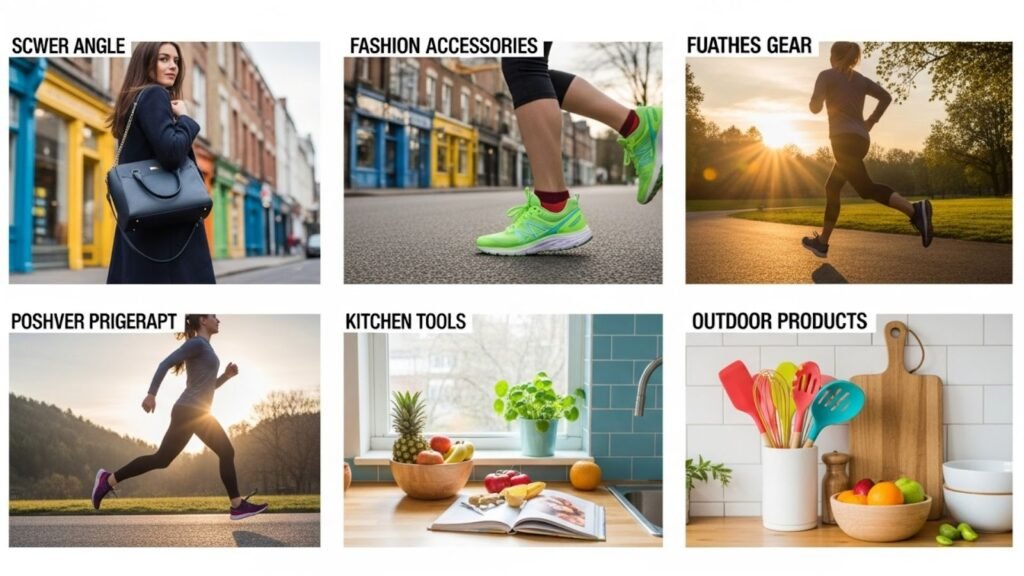
Lifestyle photos are where you show a product in action, and this is where the Best Angles for Product Photography truly make the biggest difference. When shoppers see a product being used by a person or placed naturally in a real environment, they instantly understand scale, purpose, and emotional value. The angle you choose influences the mood and storytelling more than you think. Many brands use slightly lower angles for lifestyle images because this creates a sense of presence, as if the viewer is standing in the scene. A lower eye-level angle makes lifestyle photos feel more human because it matches how we naturally look at objects around us. This angle is particularly effective for fashion accessories, fitness gear, furniture, and outdoor products.
For lifestyle setups involving kitchen tools, beauty items, or home décor, a forty-five-degree angle usually looks the most natural. It allows you to capture both the front and top of the product, making the scene believable and warm. Lifestyle images rarely use extreme top-down or dramatic side angles because the goal is not to show off structure but to show how the item fits into a person’s life. With these scenes, always remember that a natural angle tells a natural story, and that story influences conversion.
Creative Angles for Unique Branding
Sometimes, brands want photos that stand out from typical e-commerce styles, and this is where creative angles shine. When people search for the Best Angles for Product Photography, they often overlook the artistic side of angles. For example, shooting from a low angle gives a small product an impressive, larger-than-life feel. This can make perfumes, tech accessories, and sneakers appear premium and bold. When the viewer feels the product is elevated, the emotional impact increases.
Diagonal angles are also popular when brands want energy and motion in their visuals. These angles create dynamic tension and can make simple products feel more alive. This technique works extremely well for beverage bottles, cosmetics, watches, and sports items. You can also experiment with extreme close-up angles, where only a portion of the product is visible. These shots highlight texture and craftsmanship, and they help build brand identity by showcasing details that customers rarely notice. Creative angles are powerful because they transform ordinary items into visual statements that feel distinct and memorable.
Angles That Increase Click-Through Rates in E-Commerce
High-CTR images generally have something in common: clarity, attractive lighting, and angles that reveal the most important features of a product quickly. When analyzing the Best Angles for Product Photography, one trend becomes very clear. The forty-five-degree angle, the straight-on angle, and the flat lay angle consistently outperform others because they communicate product information instantly. They are visually organized and easy to understand within milliseconds, which is exactly how long shoppers take before deciding whether to click.
Flat lays are particularly strong for overhead-heavy product types such as stationery, skincare sets, accessories, and collections of small items. This angle helps potential buyers see every component at once. Meanwhile, straight-on angles work extremely well for electronics, appliances, packaged goods, and beauty products because these items need an angle that makes the shape symmetrical and satisfying to view. When combined with clean lighting, these angles dramatically increase click-through rates because shoppers feel confident about what they are seeing.
Angles That Reduce Product Returns
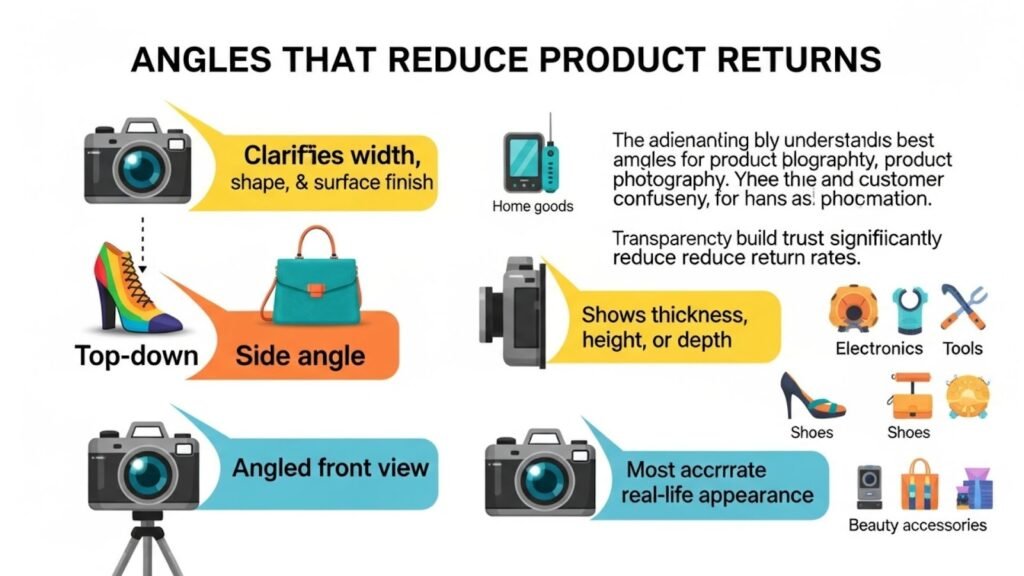
One major advantage of understanding the Best Angles for Product Photography is that correct angles reduce customer confusion. Many e-commerce returns happen simply because buyers feel the product looked different online. That’s why the top, side, and angled front views should always be included. These are not creative choices; they are essential for transparency. When shoppers see all sides, they know exactly what they’re getting.
Top-down angles help clarify width, shape, and surface finish. Side angles help show thickness, height, or depth. The angled front view combines both elements and gives the most accurate representation of real-life appearance. When these three angles are presented together, return rates drop significantly because customers feel they can trust the listing. This is especially important for home goods, electronics, tools, bags, shoes, and beauty accessories.
Angles for Highlighting Materials and Textures
Textures are extremely important in online selling because shoppers cannot touch the product. To capture texture properly, the Best Angles for Product Photography usually involve subtle shadows and slight side angles. When light hits at an angle rather than straight on, it creates shadow depth that reveals material details. For leather, fabrics, matte finishes, and wooden surfaces, a gently lowered perspective works incredibly well.
For glossy items, such as glass, jewelry, or metal, a slightly elevated angle prevents harsh reflections and gives the surface a smooth, premium appearance. Rings, necklaces, and watches often look best when photographed at a shallow angle with the camera positioned just above the product. This prevents distortion and allows the texture and shine to look elegant instead of overexposed or overly reflective.
Angles for Capturing Product Scale
One of the biggest challenges online shoppers face is understanding size. To solve this, the Best Angles for Product Photography often involve comparisons within the frame. Shooting from eye level or slightly above eye level creates a more accurate sense of scale because it mimics real-world viewing. This angle helps customers visualize how large or small an item truly is.
For bags, shoes, bottles, and décor items, this angle is crucial. If you shoot too high, the product may appear smaller. If you shoot too low, it may appear larger than expected. Scale is all about honesty and clarity, and the angle determines whether the perspective feels real or distorted. Adding a hand, a common object, or a lifestyle element can also help reinforce accurate scale, as long as it aligns with brand style.
Angles for Reflective and Difficult Products
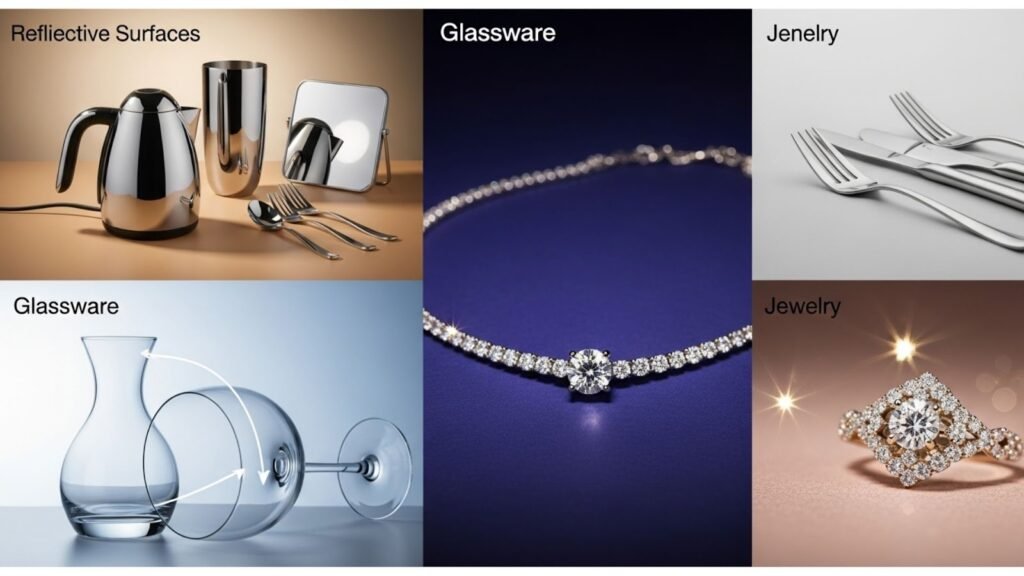
Some products are notoriously challenging to photograph, such as mirrors, chrome objects, cutlery, jewelry, and glassware. These items require very precise angle control because reflections can destroy the quality of an image instantly. The Best Angles for Product Photography for reflective surfaces typically involve slightly off-center placements to avoid capturing the camera, photographer, or unwanted light reflections.
For glass items, a quarter-turn angle usually works best. This means you rotate the product so it’s not facing the camera directly, but not in full profile either. This technique enhances the shape without creating too many reflections. When combined with diffused lighting, this angle gives glass its elegant, transparent look.
For jewelry, a low front angle highlights shine, while a higher-angle shot showcases details. Many jewelry brands use both angles because they provide a full picture of both craftsmanship and sparkle.
Final Thoughts and How Aitinsider Can Help
Finding the Best Angles for Product Photography is all about understanding what customers want to see. Angles shape visual clarity, emotional impact, and purchase confidence. The right angle makes your product look trustworthy and enticing, and the wrong angle can make buyers scroll past or misunderstand what you offer. Whether you are working with simple everyday items or highly reflective luxury products, angles are your strongest tool for boosting conversion, reducing returns, and improving brand experience.
If you want professional editing, background cleanup, color correction, retouching, shadow creation, or creative enhancements for your product images, aitinsider is here to help. We specialize in product photo editing for e-commerce brands, photographers, and businesses that want their visuals to look polished, consistent, and ready to sell. With our team handling your editing, you can focus on shooting while we take care of the final touches that make your angles shine even more.
Whenever you’re ready to level up your product images, visit aitinsider, your trusted partner for professional image editing services.